NEMO
THE INSPIRER
THE STORYTELLER

ENFP

The ENFP personality type is characterized by deep emotional sensitivity and a strong desire to explore possibilities that align with their dreams and values. As one of the 16 Myers-Briggs personality types, ENFPs are energized by exploring ideas and building meaningful relationships. They are at their best when they follow their inspiration and connect ideas to a personal sense of authentic purpose.

EXTRAVERTED
INTUITION
FEELING
PERCEIVING
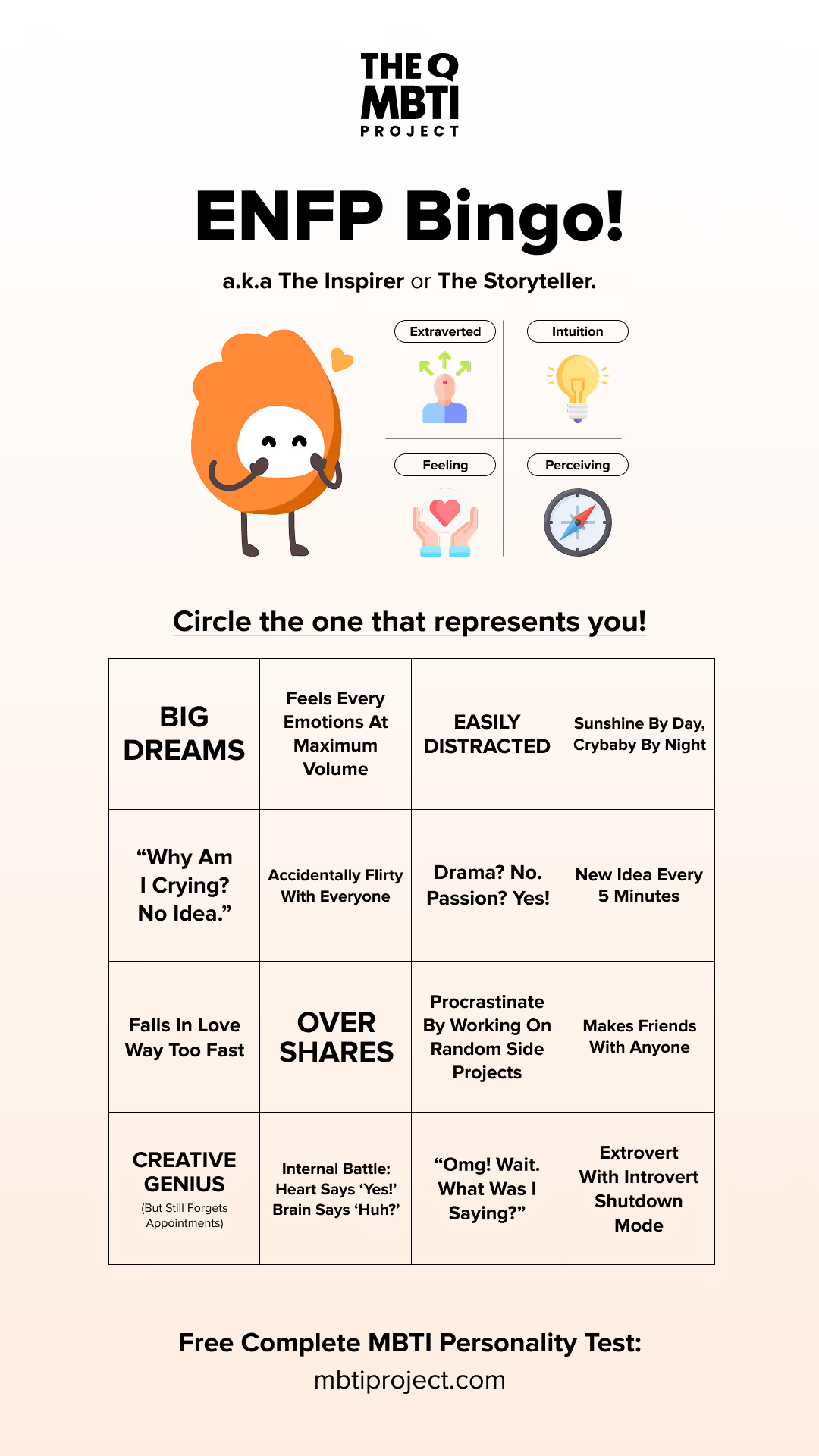
ENFP BINGO!

Think you’re a real ENFP?
Download this ENFP Bingo, mark your squares, and post it on your Stories! Don’t forget to tag @thembtiproject. We’ll feature the best ones!

Download ENFP Bingo

ENFP Introduction

ENFP is an Extraverted (E), Intuitive (N), Feeling (F), and Perceiving (P) personality type, driven by constant curiosity that searches for meaningful possibilities and authentic self-expression.

ENFPs are often called The Inspirer or The Storyteller because they have a natural gift for turning their experiences and emotions into meaningful stories that inspire and uplift others.

Wherever they go, ENFPs’ heartfelt empathy and genuine passion never fail to ignite hope, dreams, and positive transformation in those around them.

UNFORTUNATELY ACCURATE:

ENFPs’ productivity depends 90% on their vibes ✨. When inspired, they can work for 12 hours straight. If not, they procrastinate by launching a random side project.

Classic ENFP Lines:

“I know it sounds random, but hear me out!”

“Wait... This reminds me of something!”

“I know I'm really tired but I still want to talk.”

ENFP Strengths

1. Exceptional Ability to See Potentials

ENFPs naturally see potential in people and ideas. They often believe in something long before others do and that belief alone can make a real difference.

2. Deep Authentic Empathy

ENFPs’ empathy comes from a genuine desire to understand what truly matters to someone. That desire is rooted in wanting others to feel seen, validated, and accepted.

3. Natural Inspirational Communication

ENFPs are gifted at putting emotions into words. They can translate their thoughts, feelings, and experiences into stories that move people and bring life to others.

4. High Emotional Resilience

ENFPs feel deeply, and yes, things can hurt them. But despite that, they are surprisingly resilient. After emotional setbacks, they bounce back with renewed hope and beliefs.

5. Adaptive & Creative Problem-Solving

ENFPs' openness helps them find creative paths when there’s no obvious answer. They excel in ambiguous situations where flexibility and human understanding matter.

6. Value-Driven Courage

ENFPs stand unshaken in their values. They are willing to speak up when something goes against what they believe in, courageously maintaining their integrity.

Your MBTI Superpower!

Download our free 15-page guide to the most underrated strengths of the ENFPs mind

ENFP Weaknesses

1. Struggling to Stay Consistent

Starting an inspiring project is easy, but finishing it is a different story. When a task loses personal meaning or emotional connection, consistency becomes hard.

2. Too Many 'Yes' es

ENFPs say yes easily, especially when something sounds exciting or meaningful. Later, they may feel overwhelmed trying to live up to too many commitments at once.

3. Taking Things Personally

Because their values are deeply personal, ENFPs can feel more hurt by criticism than intended. Even moments of misunderstanding can linger longer than expected.

4. Overgiving Without Boundaries

ENFPs are generous with their energy, empathy, and time. Without learning to set clear boundaries, they may give so much that they forget to check in with themselves.

ENFP Relationships

ENFP Communication Style

ENFPs are highly adaptive communicators who naturally adjust their tone, language, and approach based on who they’re speaking with and the emotional atmosphere. They communicate with a strong focus on personal meaning, often using storytelling, personal examples, and emotional context rather than just stating solely facts or conclusions.

ENFPs also tend to think out loud. They connect ideas more clearly by talking them through. Although ENFPs often appear open and expressive, their communication is more internally filtered than it seems. They process their deeper thoughts and feelings privately first, then share what feels aligned and genuine.

ENFP Compatibility With Other Personalities

ENFPs tend to feel most naturally compatible with INFJ, INTJ, INFP, and ENTP. With INFJs and INTJs, there is a strong balance between the inspiration ENFPs bring and the depth that NJ types offer. With INFPs, compatibility is rooted in shared values, as both types care deeply about authenticity and staying true to themselves. ENFPs also connect well with ENTPs, where shared curiosity and idea exploration create an exciting dynamic.

More challenging pairings for ENFPs often include types that prioritize structure or emotional restraint, such as ISTJ, ESTJ, ISTP, and sometimes ESTP. These types can provide grounding and practicality, but may struggle to fully understand the ENFP’s emotional nuance or flexible approach to life. With maturity, mutual respect, and clear communication, these relationships can work, but they usually require intentional effort and adjustment from both sides.

ENFP Main Need in Romantic Relationship

ENFPs need a relationship that feels emotionally meaningful, authentic, and alive. They feel safest when they are genuinely accepted and free to express their thoughts and emotions without judgment. More than constant reassurance, ENFPs seek emotional presence, where where both people engage deeply in conversation, listen with care, and respect each other’s personal values and individuality.

ENFP Main Fear in Romantic Relationship

ENFPs’ main fear in a relationship is losing authenticity or being constantly misunderstood. They fear being loved only for their positive energy, while their deeper emotions and true inner self go unseen or dismissed. Over time, this can turn into a fear of feeling emotionally trapped where they are unable to express themselves honestly or stay true to who they are.

ENFP Relationship Blindspots

Blind spots are unnoticed patterns or habits that can create misunderstandings or emotional distance, even when no harm is intended.

BLINDSPOT #1

Falling in Love With Potential

ENFPs are exceptionally good at seeing who someone could become. In relationships, this can cause them to stay invested in future potential rather than fully acknowledging present behavior.

BLINDSPOT #2

Underestimating Their Own Need

ENFPs may compromise their own needs to keep the relationship feeling alive and connected. This can lead to exhaustion or resentment if boundaries aren’t consciously maintained.

BLINDSPOT #3

Avoiding Hard Conversations

ENFPs value emotional safety, so they may delay difficult conversations to avoid hurting the relationship. Unfortunately, unspoken frustrations don’t disappear, they quietly accumulate.

ENFP Careers

ENFP Ideal Career Life

ENFPs perform best in careers that combine creativity, human connection, and meaningful exploration. Motivation comes when they see that their work has a visible, meaningful impact on people or the world around them. Roles that support their personal growth and continuous learning, while offering enough flexibility and variety, will unlock ENFPs’ highest levels of engagement and commitment.

ENFP Career Stressors

Career stress for ENFPs often comes from misalignment rather than workload. Repetitive tasks, rigid systems, or roles disconnected from a larger purpose can leave them feeling drained and uninspired. Without opportunities for personal growth and creative expression, even highly capable ENFPs can slowly lose energy and confidence.

Best Career Paths for ENFP

Creative Communication & Storytelling

Examples: Content Creator, Screenwriter, and Creative Director.
This path allows ENFPs to transform their inner world into stories and ideas that resonate emotionally with others. It becomes both self-expression and a way to genuinely move people.

Entrepreneurship & Vision-Driven Roles

Examples: Startup Founder, Personal Branding, Business Owner.
Entrepreneurship gives ENFPs the freedom to build something aligned with their values rather than fitting into someone else’s structure. It can be a perfect outlet for their strong visions of what could exist but doesn’t yet.

Marketing, Branding & Business Strategy

Examples: Brand Manager, Marketing Strategist, Business Development.
This path works for ENFPs because it blends creativity with people-understanding. ENFPs are great at sensing what resonates emotionally and translating that into brand messages or marketing strategies.

Social Impact & Purpose-Driven Work

Examples: NGO or Non-Profit Roles, Advocacy, Community Outreach.
ENFPs need to feel that their effort matters beyond themselves. Purpose-driven work could gives them emotional fulfilment, especially when the organization's mission aligns with their personal values.

People Development Professions

Examples: Coach, Counselor, Talent Development, or Teacher.
ENFPs are deeply fulfilled when they can walk alongside others during moments of growth or healing. People development roles allow them to encourage others and witness them becoming more confident and alive.

Flexible & Explorative Careers

Examples: Freelancing or Consulting (People or Creative Idea fields)
Most ENFPs don’t live in one fixed identity. Careers that allow evolution and exploration help them grow without feeling trapped. This path honors the ENFP’s need to change direction as their values deepen over time.

Careers to Avoid For ENFP

Highly Repetitive, Detail-Heavy Roles

Examples: Accounting, Auditing, or Data Entry Clerk.
Careers that revolve around the same tasks every day and require prolonged focus on strict details can leave ENFPs feeling drained. When there is little room for exploration, their engagement fades quickly.

Hierarchy-Heavy Environments

Examples: Corporate Compliance or Government Bureaucracy Roles.
ENFPs struggle in systems where authority slows decision-making and personal input is discouraged. When they are expected to follow structure without understanding the why, they may feel emotionally disconnected from their work.

Emotionally Detached or Impersonal Work

Examples: Data Analyst, Risk management, or Banking Operations.
Roles that minimize human authenticity or treat people purely as data, numbers, or transactions can feel like torture to ENFPs. These kinds of work can leave ENFPs feeling hollow, no matter how stable or prestigious they may appear.

Roles With No Direct Impact or Purpose

Examples: Long-term Academic Research / Internal Corporate Strategy.
ENFPs struggle when they can’t see why and how their work matters. Careers with slow feedback loops or unclear, immediate impact can leave them feeling unmotivated, even if the work seems interesting at first sight.

Real ENFP Examples

Real Human ENFP

Robin Williams
(Actor & Comedian)

"No matter what people tell you, words and ideas can change the world."

"I used to think that the worst thing in life was to end up alone. It's not. The worst thing in life is to end up with people who make you feel alone."

Walt Disney
(Animation Pioneer)

"All our dreams can come true, if we have the courage to pursue them."

"I always like to look on the optimistic side of life, but I am realistic enough to know that life is a complex matter."

Anne Frank
(German Diarist)

"Despite everything, I believe that people are really good at heart."

"We all live with the objective of being happy; our lives are all different and yet the same."

Ellen DeGeneres
(Television Host)

"Sometimes you can't see yourself clearly until you see yourself through the eyes of others."

"I'm a comedian, and I definitely see the humor in a lot of things. I am also sad a lot. I cry often and easily. I think you're supposed to feel all kinds of things."

Fictional ENFP Characters

Aang (安昂)
(Avatar)

“When we hit our lowest point, we are open to the greatest change.”

“It’s easy to do nothing. It’s hard to forgive."

Zoey
(K-Pop Demon Hunter)

"I do have one idea… Actually, 57, but let's start with my favorite."

"I felt like my thoughts and my lyrics and all my notebooks were just useless and weird. But with the two of you, they mean something. I mean something."

Peter Parker
(Spiderman: Homecoming)

"When you can do the things I can, but you don't, and then the bad things happen... they happen because of you."

"Come on, Strange. Have a heart."

Rapunzel
(Tangled)

“Find your humanity! Haven’t any of you ever had a dream?”

“No. You were wrong about the world, and you were wrong about me, and I will never let you use my hair again!”

Common ENTP Mistypes

1. INFP - Nara

Why ENFPs mistype as INFPs:

  • Both have strong Fi (Introverted Feeling), making them appear emotionally driven and strongly focused on authenticity.
  • ENFPs can also be introspective and reflective, especially when they are processing emotions or feeling overwhelmed.
  • Many tests oversimplified deep sensitivity to emotion with introversion, causing ENFPs to be mislabeled as introverts.

Key Differences:

  • ENFP (Ne Dom & Fi Aux): Generates clarity by exploring ideas externally and talking things through.
  • INFP (Fi Dom & Ne Aux): Generates clarity by reflecting internally before speaking it out.
  • ENFPs are energized by exchanging possibilities. INFPs are energized by internal emotional alignment.
See INFP's Profile
2. ENTP- Nimo

Why ENFPs mistype as ENTPs:

  • Both lead with Extraverted Intuition (Ne), which makes them naturally curious and expressive in exploring ideas out loud.
  • ENFPs can also sound logical and playful in debate, especially when they are energized or inspired (just like ENTPs).
  • ENFPs may hold back emotional expression in public settings, leading others to misinterpret them as more analytical or Thinking-oriented.

Key Differences:

  • ENFP (Fi Auxiliary): Evaluates ideas based on personal meaning and values.
  • ENTP (Ti Auxiliary): Evaluates ideas based on internal logical consistency.
  • ENFPs tend to feel unsettled by emotional misalignment, while ENTPs are more bothered by logical flaws or inconsistencies.
See ENTP's Profile
3. ESFP - Nuna

Why ENFPs mistype as ESFPs:

  • ENFPs can be lively, expressive, and socially engaging, especially in fun or creative settings. This can resemble key characteristics of ESFPs.
  • On the surface, ENFP behavior may appear spontaneous and energetic, which many tests mistakenly associate with Se-dominance.

Key Differences:

  • ENFP (Ne Dominant): Focuses more on future possibilities, abstract meanings, and patterns.
  • ESFP (Se Dominant): Focuses more on immediate experiences and real-time stimulation.
  • ENFPs live more in “what could be”. ESFPs live more in “what’s happening now.”
See ESFP's Profile
Cognitive Functions Test

Specifically Designed to Navigate Mistypes

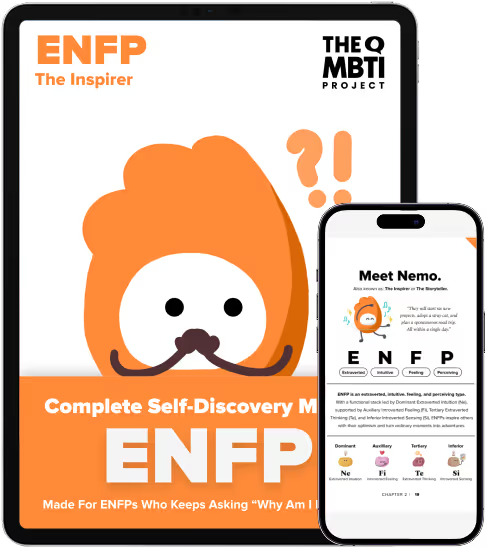
A Complete Self-Discovery Manual For An
ENFP

A Visual Self-Discovery Guide for ENFPs Who Struggle to Turn Dreams and Inspiration Into a Meaningful Life Direction.

Instant access • Visually Structured • Made Specifically for ENFP
Or See What’s Inside?
Thank You!
Your guide is on its way to your inbox.

Please check your email within the next 15 minutes. Don’t forget to check your spam or promotions folder just in case
Continue Exploring
Your Personalized [MBTI] Superpower Guide Is Ready!
We created a free illustrated guide to help you understand [MBTI]'s 5 best natural strengths. The guide will be sent to the email address you entered.
Thank You!
Your guide is on its way to your inbox.

Please check your email within the next 15 minutes. Don’t forget to check your spam or promotions folder just in case
Continue Exploring
Oops! Something went wrong while submitting the form.
------------------------------------------------------------------