NIMO
THE DEBATER
THE VISIONARY

ENTP

The ENTP personality type is characterized by a high level of curiosity and a constant drive to explore new possibilities. As one of the 16 Myers-Briggs personality types, ENTPs are energized by innovation and creative ideas, often thinking best when they test their ideas through experimentation.

EXTRAVERTED
INTUITION
THINKING
PERCEIVING
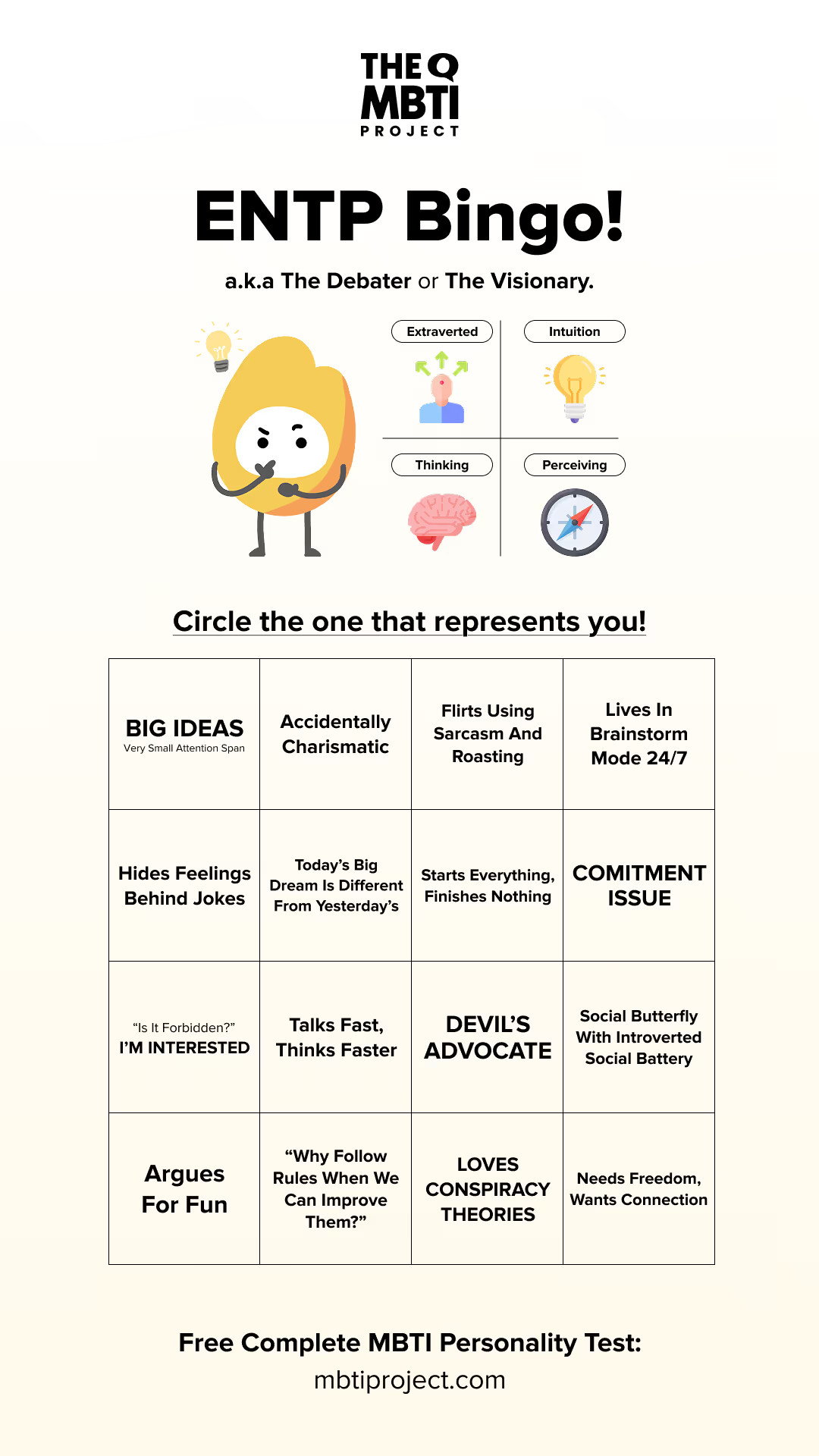
ENTP BINGO!

Think you’re a real ENTP?
Download this ENTP Bingo, mark your squares, and post it on your Stories! Don’t forget to tag @thembtiproject. We’ll feature the best ones!

Download ENTP Bingo

ENTP Introduction

ENTP is an Extraverted (E), Intuitive (N), Thinking (T), and Perceiving (P) personality type, known for their curiosity-driven approach to life and their love for exploring possibilities and unconventional ideas.

ENTPs are also known as “The Debaters” because they enjoy examining ideas from multiple angles, challenging assumptions, and refining their thinking through discussion.

With bold creativity and a fearless approach to innovation, they naturally become catalysts for change wherever they go.

UNFORTUNATELY ACCURATE:

ENTPs can start 10 projects at once, forget half of them, and pick them up months later like nothing happened (often with even more ideas).

Classic ENTP Lines:

“Hey... I wasn’t arguing. I was just trying to improve the conversation.”

“Why follow rules when we could make better ones?”

“I don’t need instructions. I use my imagination.”

ENTP Strengths

1. Innovativeness

ENTPs have a natural ability to spot alternative paths that most people wouldn’t think of, making them highly effective at creative problem-solving.

2. Analytical Thinking

ENTPs are sharp thinkers who love breaking ideas apart to understand how things truly work beneath the surface. If something doesn’t make sense, they’ll keep digging until it does.

3. Charismatic

ENTPs have a natural charm that draws people in. They communicate with enthusiasm and unconventional humor, making conversations feel engaging and magnetic.

4. Excellent Debaters

ENTPs don’t argue for the sake of winning. They debate to examine every angle and take discussions into deeper territory to uncover what’s really true.

5. Big Picture Vision

ENTPs are future-oriented thinkers who often spot solutions before problems appear. Their mix of creativity and logic helps them step outside conventional approaches and design better paths forward.

6. Adaptability

ENTPs adapt quickly when plans change. When things shift unexpectedly, they improvise fast and often turn them into new opportunities. Sudden change doesn’t throw them off, it could actually energizes them.

Your MBTI Superpower!

Download our free 15-page guide to the most underrated strengths of the ENTPs mind

ENTP Weaknesses

1. Appear Argumentative

ENTPs enjoy debating as a way to explore different perspectives, but not everyone experiences it the same way. What feels engaging and fun to them may come across as confrontational or draining to others.

2. Struggles Finishing

ENTPs are incredible at starting new projects, but once the excitement fades, their motivation does too. They have a habit of jumping to the next shiny idea before completing one.

3. Emotionally Detached

ENTPs naturally process things through logic first. Instead of fully experiencing emotions, they often try to make sense of them, which may come across as emotional distance without meaning to.

4. Impulsive Tendency

ENTPs get swept up in excitement and sometimes make decisions without thinking too far ahead. That spontaneity keeps their life interesting, but it can also lead to unnecessary chaos.

ENTP Relationships

ENTP Communication Style

ENTPs communicate in a dynamic, fast-moving way, moving quickly from one idea to the next. They love sharing unconventional thoughts and exploring concepts, theories, and random hypotheses through conversation. Talking with an ENTP often feels inspiring and intellectually stimulating, encouraging others to think more openly and creatively.

ENTP Compatibility With Other Personalities

ENTPs tend to connect well with people who can match their curiosity and challenge their thinking. They are often highly compatible with intuitive types (like INFJ, INTJ, ENFP, and INFP) who also enjoy deep conversations and appreciate intellectual exploration.

ENTPs also enjoy stimulating friendships with other thinkers (such as ENTJ, INTP, and fellow ENTP) where meaningful discussions can flourish. More structured types like ISFJ, ISTJ, ESFJ, or ESTJ may initially clash with ENTP’s spontanious and flexible nature, but can form strong relationships when both sides learn to appreciate each other.

ENTP Main Need in Romantic Relationship

ENTPs are drawn to relationships that encourage intellectual stimulation and personal growth. They value independence, so they need a relationship that respects their autonomy rather than trying to control or restrict them. They also need the freedom to be themselves, paired with a partner who can share adventures while also being a safe place to come home to.

ENTP Main Fear in Romantic Relationship

ENTPs often fear losing their sense of freedom in a relationship. They may worry that getting close to someone will restrict their ability to explore and grow, leading them to hold back out of fear of being confined. This fear may cause them to keep emotional distance, not because they lack depth or loyalty, but because they want to avoid feeling trapped in a controlling dynamic.

ENTP Relationship Blindspots

Blind spots are unnoticed patterns or habits that can create misunderstandings or emotional distance, even when no harm is intended.

BLINDSPOT #1

Constant Need For Change

ENTPs' constant desire for novelty and stimulation can make their partner feel unstable or insecure. Switching priorities quickly can be confusing or stressful.

BLINDSPOT #2

Interrupting in Conversations

ENTPs think and speak quickly, which can unintentionally overpower partners who need more time to process or express themselves.

BLINDSPOT #3

Avoiding Conflict Resolution

Although ENTPs enjoy intellectual debate, emotional conflict can feel challenging for them. They often cope by detaching or using humor to ease the discomfort, instead of resolving the underlying issues.

ENTP Careers

ENTP Ideal Career Life

ENTPs thrive in careers that give them the freedom to solve complex problems and push boundaries, rather than just following rules. They excel in environments that encourage creativity, experimentation, and collaboration. ENTPs are energized by future-focused projects and roles that allow them to influence change and learn continuously.

ENTP Career Stressors

Repetitive tasks and strick rules will drain ENTPs’ energy quickly. When they are placed in work environments that resist new ideas, ENTPs will start to feel trapped and disconnected from their best abilities. ENTPs struggle when expected to focus solely on execution without creative input or when their enthusiasm is dismissed as unrealistic. They can also become overwhelmed when overloaded with long stretches of solitary, routine work.

Best Career Paths for ENTP

Entrepreneurship & Startups

Examples: Startup founder (tech, media, education, consumer brands).
ENTPs shine in roles where they can build something from scratch and experiment freely. The fast pace and constant problem-solving of the entrepreneurship world fit perfectly with their ability to think creatively.

Marketing, Branding & Creative Strategy

Examples: Marketing consultant, brand strategist, and creative director.
These fields allow ENTPs to combine psychology, storytelling, and strategic thinking. ENTPs are instinctively good at reading audiences and pitching bold concepts most people wouldn’t even consider.

Law & Debate-Related Professions

Examples: Legal consultant, trial lawyer, competitive debate coach.
With their natural talent for creating strong arguments, ENTPs can excel in roles like lawyer, negotiator, or policy debate. ENTPs thrive in challenging assumptions and crafting persuasive arguments backed by solid logic.

Consulting & Problem-Solving Roles

Examples: Management, strategy, or business development consultant.
ENTPs love being dropped into tough situations where the solutions aren’t obvious. Consulting provides them with a variety of intellectual challenges in which they can rebuild structures and offer smarter approaches while avoiding repetitive work.

Product and Tech Development (UX)

Examples: Innovation lead, UX strategy consultant, product manager.
Whether it's designing software or building new technology for a specific purpose, ENTPs can turn abstract ideas into real solutions that improve how people live and work. Their relentless curiosity make them great at the process of ideation, testing, and optimization.

Journalism, Content Creation, and Media

Examples: Youtube podcaster, journalist, or documentary producer.
ENTPs are natural communicators with a passion for culture and exploring different viewpoints. Media and content creation give them space to research ideas, challenge norms, and initiate thought-provoking conversations with wide audiences effortlessly.

Careers to Avoid For ENTP

Repetitive Administrative Roles

Examples: Administrative assistant, office clerk, records management.
Jobs centered on routine paperwork and predictable day-to-day tasks tend to drain ENTPs' energy quickly. Without room for creativity, their motivation fades fast.

Traditional Corporate Bureaucracy

Examples: Compliance officer, civil servant, or internal audit roles.
Roles where decisions move slowly and traditional hierarchies must be followed without question can feel suffocating to ENTPs. They struggle in work environments where they don't have any room to challenge systems or suggest improvements.

Detail-Heavy Careers

Examples: Accountant, book-keeping, auditor, and data-entry.
ENTPs can handle strategy and numbers, but detail-heavy accounting or data entry that requires long periods of quiet, repetitive focus can drain them quickly and doesn’t suit their natural strengths.

Low-Interaction Work Environments

Examples: Night-shift data processing, archival, or back-office roles.
The absence of regular idea exchange or meaningful interaction can leave ENTPs feeling mentally disconnected. ENTPs thrive in dynamic settings where they can discuss ideas, challenge perspectives, and think out loud.

Real ENTP Examples

Real Human ENTP

Robert Downey Jr.
(Acting)

"Life is just so painful and messy and hard and worth it and all that stuff."

"I know very little about acting. I'm just an incredibly gifted faker."

Thomas Alva Edison
(Inventor)

"I have not failed. I've just found 10,000 ways that won't work."

"Anything that won't sell, I don't want to invent. Its sale is proof of utility, and utility is success."

Socrates
(Philosopher)

"It is better to change an opinion than to persist in a wrong one."

"Wonder is a feeling of a philosopher, and philosophy begins in wonder.

Christopher Columbus
(Explorer)

“You can never cross the ocean unless you have the courage to lose sight of the shore.”

“Life has more imagination then we carry in our dreams.”

Fictional ENTP Characters

The Joker
(DC Villain)

“The only sensible way to live in this world is without rules.”

“I used to think my life was a tragedy, but now I realize it’s a comedy.”

Deadpool
(Marvel Anti-Hero)

"Life is an endless series of train wrecks with only brief commercial-like breaks of happiness."

"You don't need to be a superhero to get the girl. The right girl will bring out the hero in you."

Jack Sparrow
(Pirate Captain)

"Me? I'm dishonest, and a dishonest man you can always trust to be dishonest."

"Why fight when you can negotiate?"

Satoru Gojo
(Anime Protagonist)

"My Student's Watching, So I'm Going to Show Off..."

"I believe love is the most twisted curse of all."

Common ENTP Mistypes

1. ENFP - Nemo

Why ENTPs mistype as ENFPs:

  • Both lead with Ne Dominant Function, so the curiosity and idea-hopping tendency look identical on surface.
  • ENTPs also use Fe Tertiary Function socially, which can appear emotionally expressive and people-focused.
  • Many tests equate “talks about people” or “empathetic” with Fi, mislabeling ENTPs.

Key Differences:

  • ENTP (Ti Auxiliary): Evaluates ideas by internal logical consistency.
  • ENFP (Fi Auxiliary): Evaluates ideas by internal value alignment.
  • ENTPs are comfortable arguing against their own stated beliefs, while ENFPs are not.
See ENFP's Profile
2. INTP- Nino

Why ENTPs mistype as INTPs:

  • ENTPs under deep focus can operate more on their Ti auxiliary, appearing introverted.
  • Intellectual ENTPs often identify more with thinking than social energy.
  • Socially selective ENTPs assume introversion.

Key Differences:

  • ENTP: Externalizes thinking. Means clarity emerges through discussion.
  • INTP: Internalizes thinking. Means clarity emerges in solitude.
  • ENTPs feel stagnant without idea exchange, whle INTPs feel drained by it.
See INTP's Profile
3. ENTJ - Nico

Why ENTPs mistype as ENTJs:

  • Healthy ENTP Leaders can appear decisive, strategic, and confident.
  • Ne Dominant + Ti Auxiliary combination can mimic high-level planning and problem-solving similar to Te.
  • Leadership roles force ENTPs into execution mode.

Key Differences:

  • ENTP: Tend to explore multiple frameworks before deciding, resisting early closure.
  • ENTJ: Chooses a direction early and optimizes execution immediately.
  • ENTPs enjoy strategy but tire quickly with too much enforcement and structure.
See ENTJ's Profile
Cognitive Functions Test

Specifically Designed to Navigate Mistypes

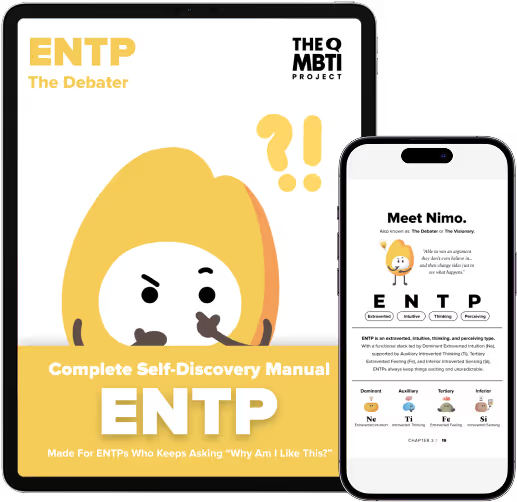
A Complete Self-Discovery Manual For An
ENTP

A Visual Guide for ENTPs Who Are Tired of Having Brilliant Ideas That Never Get Finished.

Instant access • Visually Structured • Made Specifically for ENTP
Or See What’s Inside?
Thank You!
Your guide is on its way to your inbox.

Please check your email within the next 15 minutes. Don’t forget to check your spam or promotions folder just in case
Continue Exploring
Your Personalized [MBTI] Superpower Guide Is Ready!
We created a free illustrated guide to help you understand [MBTI]'s 5 best natural strengths. The guide will be sent to the email address you entered.
Thank You!
Your guide is on its way to your inbox.

Please check your email within the next 15 minutes. Don’t forget to check your spam or promotions folder just in case
Continue Exploring
Oops! Something went wrong while submitting the form.
------------------------------------------------------------------