NARA
THE PEACEMAKER
THE DREAMER

INFP

The INFP personality type is characterized by deep inner values and a strong desire to live in alignment with what feels personally meaningful. As one of the 16 Myers-Briggs personality types, INFPs are driven by authenticity and a commitment to staying true to their ideals. They naturally make decisions based on what feels sincere and truthful rather than what simply appears impressive on the surface.

INTROVERTED
INTUITION
FEELING
PERCEIVING
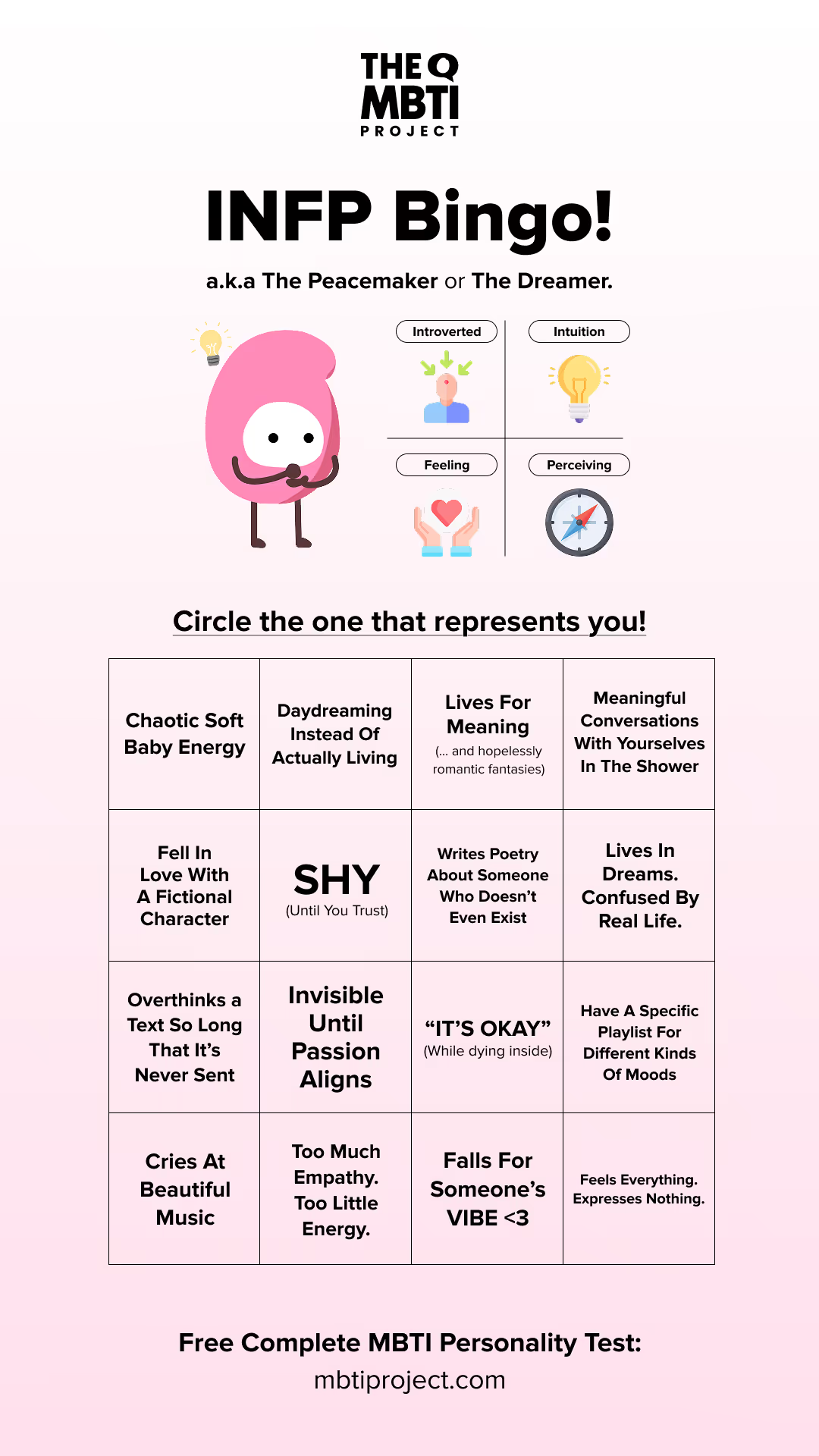
INFJ BINGO!

Think you’re a real INFP?
Download this INFP Bingo, mark your squares, and post it on your Stories! Don’t forget to tag @thembtiproject. We’ll feature the best ones!

Download INFP Bingo

INFP Introduction

INFP is an Introverted (I), Intuitive (N), Feeling (F), and Perceiving (P) personality type, driven by an inner compass that continuously checks whether their life decisions feel true to who they are inside.

INFPs are often called The Peacemaker or The Dreamer because they have a natural ability to understand the depth of people’s emotions while continuing to believe in a kinder, more authentic world.

Their presence may be soft, but their depth of empathy and integrity often leaves others feel safe, heard, and respected.

UNFORTUNATELY ACCURATE:

INFPs love fiction so much that they often understand fictional characters better than real people. Real people, unfortunately, doesn’t always come with emotionally satisfying stories.

Classic INFP Lines:

“Something about this feels off, I just can’t explain why.”

“I don’t want to argue. I just want us to understand each other.”

“Maybe I’m just being sensitive… but still.”

INFP Strengths

1. Strong Personal Values

INFPs don’t move through life by simply following trends or expectations. It is natural for them to ask what feels right, fair, and honest before making decisions.

2. Deep Emotional Awareness

INFPs pay attention to the emotional meaning beneath what people say and do. Their sincere effort to understand how someone truly feels makes others feel validated and understood.

3. Natural Authentic Self-Expression

INFPs have a rare ability to express their inner experiences through meaningful writing, art, or action. In a world that focuses on impressing others, they continue choosing to be authentic.

4. Intense Faith in Their Own Dreams

INFPs carry their dreams with patience and persistence, even through doubt or uncertainty.
They continue to trust in the power of their dreams, even when the path feels lonely.

5. Moral Courage

Despite their tendency to avoid unnecessary conflict, INFPs are firm when their core values or boundaries are violated. They stand up for what feels right, even if they stand alone.

6. Creating Emotional Safety

People often feel calmer and more open around them. INFPs don’t rush emotions or demand explanations; they allow space for others to be themselves without judgment.

Your MBTI Superpower!

Download our free 15-page guide to the most underrated strengths of the INFPs mind

INFP Weaknesses

1. Over-Internalizing Emotional Experience

Instead of releasing feelings outward, they tend to replay them internally, which can lead to rumination, self-doubt, or emotional burnout without obvious external triggers.

2. Difficulty Taking Action Without Alignment

INFPs can struggle to act when something doesn’t feel fully right inside. Even time-sensitive tasks may be delayed if they sense emotional or value misalignment.

3. Idealism That Collides with Reality

INFPs hold strong ideals about how people and the world should be. When reality consistently falls short, they may feel disappointed and struggle to accept things as they are.

4. Sensitivity to Rejection

Because INFPs tie their actions closely to their personal values and identity, criticism or misunderstanding can feel personal even when it isn’t intended that way.

INFP Relationships

INFP Communication Style

INFPs communicate from the inside out. Before they speak, they check how something feels emotionally and whether it aligns with their values. This internal filtering can make them appear hesitant, but it’s actually a sign of their intentionality in choosing words.

INFPs communicate with sincerity and listen with real attention. They notice not only what’s being said, but also the tone, pauses, and emotions underneath. Sometimes, they may struggle to find the right words to say, but it’s usually because they’re carefully translating their complex inner emotions into something that won’t be misunderstood by others.

INFPs also prefer communication that feels safe and respectful. They are more open in one-on-one vulnerable conversations or environments where emotional honesty is welcomed. In confrontational or emotionally dismissive settings, they tend to withdraw or shut down rather than argue to defend themselves.

INFP Compatibility With Other Personalities

For INFPs, compatibility is more about value alignment and being understood without having to constantly explain themselves. They connect best with people who respect their individuality.

ENFJ and INFJ could provide them direction and deep understanding, helping INFPs express their feelings outwardly without feeling rushed. ENFP connect with them through shared emotional language, bringing warmth and momentum to the INFP. With fellow Introverted Perceiving types (such as ISFP, ISTP, or INTP), INFPs often enjoy mutual respect for inner worlds and autonomy.

More challenging dynamics can arise with ESTJ, ENTJ, and sometimes ISTJ or INTJ, especially when communication leans heavily toward blunt logic or performance-oriented thinking. INFPs may feel unheard when emotions are minimized. At the same time, these types may see INFPs as overly idealistic. Still, when mutual maturity is present, INFPs and their partners can balance each other in ways that foster growth for both.

INFP Main Need in Romantic Relationship

INFPs need relationships that feel emotionally safe, sincere, and aligned with their core values. They want their feelings and inner world to be taken seriously because it is a big part of their individuality. More than simply romantic gestures, INFPs put more value in honest communication and a sense that they can be fully themselves without having to perform in front of their partner.

INFP Main Fear in Romantic Relationship

INFPs’ deepest fear is losing themselves in order to be loved. They fear having to suppress their feelings, values, or personal truth just to keep a relationship stable. More than conflict or separation, they fear being trapped in a relationship where they slowly become someone they no longer recognize. They worry about investing emotionally only to discover that their depth they bring isn’t valued in return.

INFP Relationship Blindspots

Blind spots are unnoticed patterns or habits that can create misunderstandings or emotional distance, even when no harm is intended.

BLINDSPOT #1

Assuming Emotional Understanding

INFPs are highly sensitive to emotional language and often assume others are too. As a result, they may not express their needs, boundaries, or disappointments, then feel hurt when those go unmet.

BLINDSPOT #2

Avoiding Discomfort for Too Long

INFPs sometimes tolerate discomfort to keep the peace rather than address issues early. By the time they speak up, negative emotions and frustrations are already heavier than they need to be.

BLINDSPOT #3

Idealizing Connection Over Reality

INFPs often hold a strong ideal of how a relationship should feel. When reality doesn’t match that ideal, they may quietly withdraw or question the relationship rather than adjusting expectations together.

INFP Careers

INFP Ideal Career Life

INFPs ideal career life is one that allows them to express their authenticity and feel that their work contributes to something personally meaningful. They perform best at a sustainable pace, in environments that offer creative and moral freedom without forcing them to constantly perform or suppress their emotions. INFPs care less about titles or advancement, they become fulfilled with work life that allows them to stay honest, creative, and true to who they are as an individual.

INFP Career Stressors

INFPs tend to experience the most stress in careers that give them constant pressure and prioritize performance over purpose. Environments that demand nonstop urgency and emotional detachment will surely drain them, especially when what they're expected to do violates their values, personal space, or boundaries. Over time, this misalignment doesn’t just cause burnout. It could creat an inner conflict, where work begins to feel like a self-betrayal.

Best Career Paths for INFP

Meaningful Creative Work

Examples: Book Writer, Illustrator, or Storytelling Content Creator.
INFPs thrive when creativity becomes a way to express real emotions and personal stories. This kind of work helps them turn their artistic vision into forms of communication that are meaningful and human.

Helping & Support-Oriented Professions

Examples: Counselor, Therapist, or Mental Health Support.
INFPs are naturally drawn to work that allows them to supports others emotionally and mentally. Their strengths shine brightest when helping is genuine and relational, rather than transactional.

Education & Personal Development Fields

Examples: Teacher, Tutor, or Coach (Especially in Humanities or Arts).
Mentoring or guiding others suits INFPs when learning is values-based, reflective, and transformative. They are well-suited to support individual growth through encouragement, empathy, and thoughtful guidance.

Social Impact Work & Organizations

Examples: NGO / Nonprofit Staff, Advocacy, Community Organizer.
INFPs’ personal values often align with careers connected to impactful missions and ethical causes. They feel most fulfilled when their efforts contribute to something beyond profit and support social improvements.

Independent, Flexible, or Self-Directed Work

Examples: Freelancer (Writer, Designer, Editor) or Solopreneur.
INFPs benefit from autonomy and flexibility in how they work. Careers that allow self-paced progress and personal rhythms help them maintain emotional energy and long-term sustainability.

Healing, Wellness & Mind–Body Related

Examples: Yoga Instructor, Art Therapy Roles, or Wellness Coach.
Careers focused on emotional, mental, or holistic well-being suit INFPs because of their sensitivity and respect for personal boundaries. These roles allow them to support healing through presence, empathy, and care.

Careers to Avoid For INFP

High-Pressure Persuasion Roles

Examples: Cold-Calling Sales, Telemarketer, or Comission-Only Sales.
Careers that require constant pitching, negotiation, or pushing products regardless of personal belief can feel deeply draining for INFPs. In these fields, INFPs may feel like they’re betraying their values just to perform.

Rigid Corporate & Political Environments

Examples: Traditional Corporate Admin or Government Desk Roles.
Highly hierarchical workplaces that reward conformity and internal politics over authenticity suffocate INFPs' soul. When decisions are mostly driven by power or office dynamics, they often feel invisible or disillusioned.

Emotionally Detached Technical Roles

Examples: Data Entry, Back-Office Accounting, or Algorithmic Trading.
Roles that demand emotional detachment and focus purely on systems, numbers, and efficiency (especially without visible and direct positive human impact) can feel empty over time.

Crisis-Driven, Constantly Urgent Work

Examples: Emergency Operations Coordinator or Crisis Management.
Careers built around tight deadlines and constant high pressure can quickly overwhelm INFPs. When there’s no space to reflect and recover at a humane pace, stress accumulates and often leads to intense burnout.

Real INFP Examples

Real Human INFP

Vincent Van Gogh
(Dutch Painter)

"I want to touch people with my art. I want them to say ‘he feels deeply, he feels tenderly.'"

“I dream my painting and I paint my dream.”

Johnny Depp
(American Actor)

"I think everybody's weird. We should all celebrate our individuality and not be embarrassed or ashamed of it."

I am doing things that are true to me. The only thing I have a problem with is being labeled."

Kurt Cobain
(Rock Musician)

“I'd rather be hated for who I am, than loved for who I am not.”

“They laugh at me because I'm different; I laugh at them because they're all the same.”

Franz Kafka
(Writer / Novelist)

"Don't bend. Don't water it down. Don't try to make it logical. Don't edit your own soul according to the fashion. Rather, follow your most intense obsessions mercilessly."

“I cannot make you understand. I cannot make anyone understand what is happening inside me. I cannot even explain it to myself.”

Fictional INFP Characters

Wanda Maximoff
(Scarlet Witch - MCU)

"I don’t need you to tell me who I am."

"Look, we've all been there, right? Letting our fear and anger get the best of us. Intentionally expanding the borders of the false world we created."

Frodo Baggins
(The Lord of The Rings)

“It is useless to meet revenge with revenge; it will heal nothing.”

"How do you pick up the threads of an old life? When in your heart, you begin to understand, there is no going back."

Gaara
(Naruto)

"Just because somebody is important to you, it doesn't necessarily mean that they're a good person. Even if you recognize that they're evil, people just can't win against their loneliness."

"If love is just a word, then why does it hurt so much if you realize it isn't there?"

Belle
(Beauty and the Beast)

"I know he Looks vicious, but he's really kind and gentle. He's my friend."

"I want much more than this provincial life."

Common INFP Mistypes

1. INFJ - Nomi

Why INFPs mistype as INFJs:

  • Both are idealistic, introspective, and prefers deep conversations over surface-level interaction.
  • INFPs who become more articulate about their personal meaning or purpose may appear visionary, much like INFJs.

Key Differences:

  • INFPs tend to explore multiple possibilities (Ne user), while INFJs narrow toward one guiding vision (Ni user).
  • INFPs tend to resist external emotional expectations due to their Fi orientation, while INFJs naturally adapt to them through Fe.
See INFJ's Profile
2. ISFP - Niki

Why INFPs mistype as ISFPs:

  • Both lead with Introverted Feeling (Fi), which highly values authenticity and individuality.
  • Many personality assessments oversimplify physical activity and artistic expression as signs of Se (Extraverted Sensing), leading to frequent ISFP mistyping.
  • INFPs under stress may appear more present-focused, resembling ISFP behavior.

Key Differences:

  • INFP (Ne auxiliary): Lives more in ideas and future imagined possibilities.
  • ISFP (Se auxiliary): Lives in the sensory experience and concrete actions.
  • INFPs tend to evaluate things based on their potential and possible meanings, while ISFPs focus more on how things are experienced in the present (the appearance, sensation, or physical detail).
See ISFP's Profile
3. ENFP - Nemo

Why INFPs mistype as ENFPs:

  • Both use Extraverted Intuition (Ne) and tend to make decisions guided by Feeling-based values.
  • INFPs can become quite talkative in comfortable social environments, which often leads others to mistakenly assume they are extroverted.

Key Differences:

  • INFP (Fi Dom & Ne Aux): Needs solitude to process emotions and recharge. Expression naturally comes after reflection.
  • ENFP (Ne Dom & Fi Aux): Processes emotions and gains energy through external interaction. Expression naturally comes before reflection.
  • INFPs are more selective and private in how they share emotions, while ENFPs tend to explore their feelings out loud and express them socially.
See ENFP's Profile
Cognitive Functions Test

Specifically Designed to Navigate Mistypes

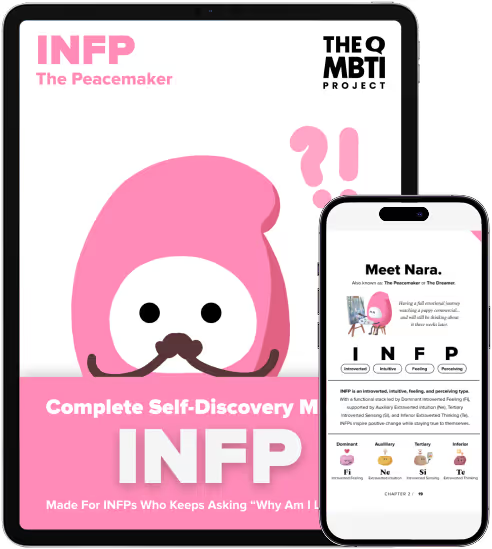
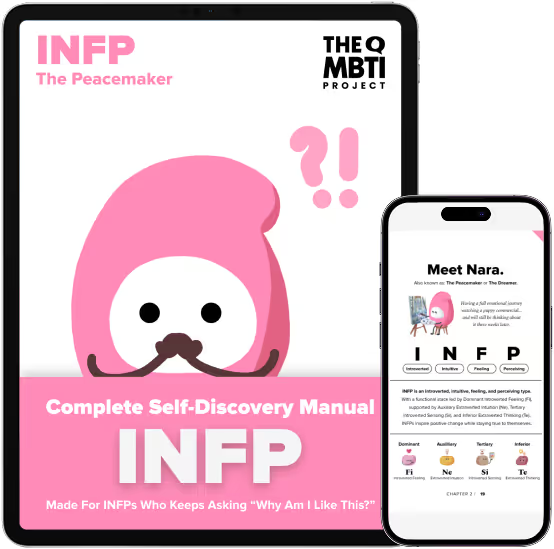
A Complete Self-Discovery Manual For An
INFP

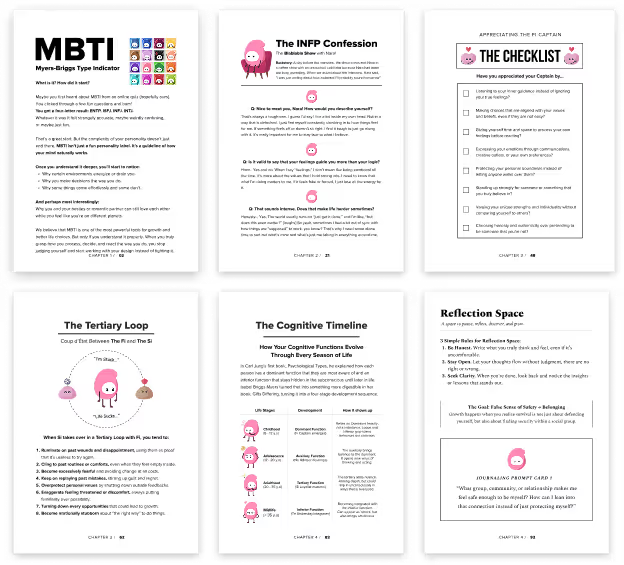
A Visual Self-Discovery Guide for INFPs who feel everything deeply but struggle to make sense of it.

Instant access • Visually Structured • Made Specifically for INFP
Or See What’s Inside?
Thank You!
Your guide is on its way to your inbox.

Please check your email within the next 15 minutes. Don’t forget to check your spam or promotions folder just in case
Continue Exploring
Your Personalized [MBTI] Superpower Guide Is Ready!
We created a free illustrated guide to help you understand [MBTI]'s 5 best natural strengths. The guide will be sent to the email address you entered.
Thank You!
Your guide is on its way to your inbox.

Please check your email within the next 15 minutes. Don’t forget to check your spam or promotions folder just in case
Continue Exploring
Oops! Something went wrong while submitting the form.
------------------------------------------------------------------