Niki
THE ARTIST
THE ADVENTURER

ISFP

ISFPs trust what feels right to them, choosing authenticity over what merely looks impressive on paper. They prefer doing what feels personally meaningful rather than shaping their lives around approval or attention.

he ISFP personality type is characterized by strong authenticity and emotional depth. As one of the 16 Myers-Briggs personality types, ISFPs trust what feels internally right to them, choosing sincerity over what merely looks impressive on paper. They are drawn to paths that feel personally meaningful rather than shaping their lives around external approval or attention.

INTROVERTED
SENSING
FEELING
PERCEIVING
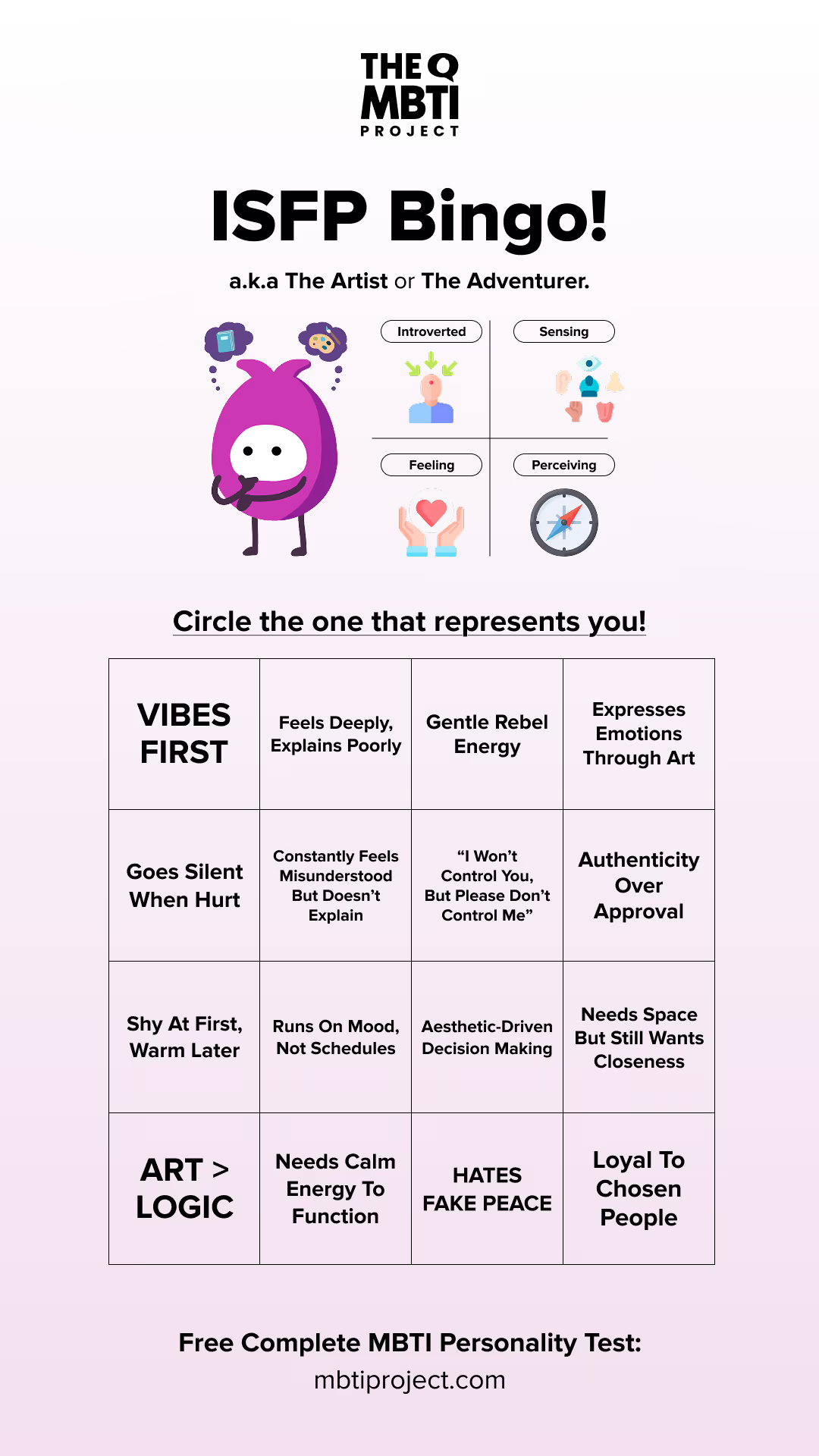
ISFP BINGO!

Think you’re a real ISFP?
Download this ISFP Bingo, mark your squares, and post it on your Stories! Don’t forget to tag @thembtiproject. We’ll feature the best ones!

Download ISFP Bingo

ISFP Introduction

ISFP is an Introverted (I), Sensing (S), Feeling (F), and Perceiving (P) personality type known for a deeply personal approach to life and a strong connection to their own lived experience.

Often called The Adventurer or The Artist, ISFPs are guided by a strong inner sense of authenticity that gives them the courage to live true to themselves. Their everyday actions, personal style, and creative work often serve as self-expression of their identity and rich emotional world.

When ISFPs live in alignment with their internal values, ISFPs become grounded and expressive individuals who show that a meaningful life doesn’t need to be loud. It simply needs to be real.

UNFORTUNATELY ACCURATE:

ISFPs express their emotions better through Spotify playlists, daily outfits, or a piece of art rather than through actual sentences.

Classic ISFP Lines:

“I don’t know how to explain it… It just doesn’t feel right.”

“I’ll decide later. Depends on how I feel about it.”

"I don’t hate people. I just don’t want to deal with them right now.”

ISFP Strengths

1. Deep Personal Authenticity

ISFPs have a strong value compass. They rarely pretend to be someone else just to fit in. When they commit to something, it's usually because it truly aligns with their values and identity.

2. Strong Emotional Awareness

ISFPs are very aware of what they’re feeling, even if they rarely express it outward. They take time to process emotions privately and tend to act in ways that honor those feelings.

3. Natural Aesthetic Expression

ISFPs express themselves through what they create, wear, or do. Their sense of beauty comes from personal experience, which is why their creativity often feels sincere and genuine.

4. Present-Moment Sensitivity

ISFPs are deeply aware of their surroundings. This helps them stay grounded and respond gently to the moment instead of too much overthinking about the future.

5. Loyal & Strong Integrity

Once ISFPs have decided to care about someone or something, their loyalty runs deep. They may not say it directly, but it shows through their consistent presence and support.

6. Flexible & Adaptable

ISFPs adjust naturally to changing situations without needing too much control to feel secure. They adapt calmly while staying true to what they believe in.

Your MBTI Superpower!

Download our free 15-page guide to the most underrated strengths of the ISFPs mind

ISFP Weaknesses

1. Avoidance of Conflict

ISFPs dislike emotional tension and may avoid confrontation even if it's actually necessary. While this helps keep peace for a while, it can cause unresolved issues build up over time.

2. Sensitivity to Criticism

Because their actions reflect their personal values, criticism can feel deeply personal to ISFPs. Even well-intended feedback can feel like a challenge to their sense of self.

3. Struggle with Long-Term Planning

ISFPs place a high value on freedom, which can make planning feel draining. As a result, they may delay important responsibilities until external pressure pushes them to act.

4. Bottling Up Emotions

Not only they struggle to put their feelings into words, ISFPs also tend to keep emotions inside to avoid causing discomfort for othes. Over time, this can lead to emotional overload.

ISFP Relationships

ISFP Communication Style

ISFPs tend to communicate in a calm, relaxed, and authentic way. They prefer to process things internally before speaking and communicate best in safe, unforced environments. Because their words are closely tied to their values and emotions, they prefer honest, sincere exchanges over small talk.

When it comes to emotions, ISFPs often express them through thoughtful actions, physical presence, or creating something meaningful rather than through words. When their emotional needs are recognized, they become capable to open and share thoughftful insights that are emotionally rich.

ISFP Compatibility With Other Personalities

ISFPs feel most at ease with people who honor their feelings and personal space. They connect well with those who offer emotional understanding (Feeling types) or structured thinking (Thinking–Judging types), as long as control and pressure are kept low.

Types like ESFJ, ENFJ, and INFJ often complement ISFPs by care, guidance, and direction. Theese types help ISFPs feel supported without being overwhelmed. Meanwhile, ISTJ or ESTJ can offer grounding when they learn to soften their delivery and respect the ISFP’s value-driven decision-making.

ISFPs often find relationships more challenging with types that lean toward confrontation or emotional detachment, such as ENTJ, INTJ, ENTP, or INTP, especially without mutual understanding. Still, compatibility for ISFPs is less about matching traits and more about how safe they feel being themselves.

ISFP Main Need in Romantic Relationship

ISFPs need relationships that nurture emotional safety and authenticity. They need a partner who give them space to process feelings at their own pace, rather than pressuring them for immediate explanations. What matters most to ISFPs isn’t dramatic romance or intensity, but steady care, gentleness, and the freedom to be themselves.

ISFP Main Fear in Romantic Relationship

ISFPs’ main relationship fear is losing themselves. Feeling pressured to become someone they are not in order to keep the relationship. ISFPs are afraid that expressing their true self will lead to judgment or control. When they sense that their partner's love comes with conditions or unrealistic expectations, ISFPs may pull away to protect their identity and inner values.

ISFP Relationship Blindspots

Blind spots are unnoticed patterns or habits that can create misunderstandings or emotional distance, even when no harm is intended.

BLINDSPOT #1

Expecting Others to 'Just Understand'

ISFPs often assume that their emotional needs are obvious through their actions and mood. When others don’t pick it up, they may feel disappointed without realizing clearer communication was needed.

BLINDSPOT #2

Avoiding Difficult Conversations

Because ISFPs value emotional harmony, they may delay addressing issues that feel tense or uncomfortable. Over time, this can lead to larger conflicts that surprise both their partner and themselves.

BLINDSPOT #3

Withdrawing Instead of Asking

When hurt or unsure, ISFPs may withdraw instead of expressing vulnerability. This can unintentionally create distance, even when reassurance and closeness are what they truly need.

ISFP Careers

ISFP Ideal Career Life

ISFPs prefer careers that offer freedom, flexibility, and alignment with their personal values. They do best when daily tasks feel personally meaningful and when they are trusted to manage their own pace and process. In environments that respect their individuality, ISFPs become deeply dedicated and highly reliable.

ISFP Career Stressors

ISFPs experience the most career stress in environments that feel controlling or emotionally unsafe. Heavy micromanagement and constant pressure that rush their optimal working pace can quickly drain them. Another major stressor for ISFPs is work that feels disconnected from their internal sense of meaning. Tasks that exist purely for optics, politics, or abstract metrics can feel empty and exhausting.

Best Career Paths for ISFP

Creative & Artistic Careers

Examples: Illustrator, Visual Artist, Fashion Stylist, and Musician.
ISFPs shine in roles where they can express things through creative output. These careers allow them to translate their rich inner world into visual, auditory, or physical forms that create meaningful impact for others.

Hands-On & Craft-Based Work

Examples: Woodworker, Pottery Artist, Artisan Baker, Furniture Maker.
ISFPs excel in careers that involve working directly with materials and tools. Doing something concrete helps them stay grounded and focused, while the finished work gives them a strong sense of personal satisfaction.

Care & Supporting Roles

Examples: Occupational Therapist, Nurse, or Support Worker.
ISFPs are well-suited for careers that involve personal care or one-on-one support. These roles align with their empathy and service-oriented compassion, allowing them to help others in practical, real ways that can be genuinely felt.

Nature & Environment-Related Careers

Examples: Wildlife Rehabilitation Worker, Park Ranger, or Gardener.
ISFPs often feel most at peace when working close to nature. Careers involving animals or outdoor environments support their sensory need for direct interaction with the natural world, helping them feel calm & emotionally balanced.

Independent Freelance Paths

Examples: Freelance Designer, Photographer, Makeup Artist, Hairstylist.
Independent and self-directed career paths support ISFPs’ need for autonomy and self-regulated pacing. These career paths allow ISFPs to work in alignment with their energy and personal rhythms rather than constant pressure and expectations.

Aesthetic & Experience-Focused Roles

Examples: Interior Decorator, UX/UI Designer, or Brand Visual Designer.
Careers that focus on making things feel good, look right, or function smoothly to improve people’s experiences tap into ISFPs’ strong present-moment sensitivity.

Careers to Avoid For ISFP

Highly Micromanaged Corporate Roles

Examples: Audit Staff, Compliance Analyst, or Corporate Officer.
Jobs with constant supervision and little autonomy can quickly drain ISFPs. When every step is monitored or dictated, they begin to feel controlled rather than trusted, which undermines their energy, motivation, and creativity.

High-Pressure Sales & Persuasion Roles

Examples: Telemarketer, Insurance Sales, or Real Estate Agent.
Careers that revolve around aggressive targets or constant performance metrics often clash with ISFPs’ internal values, especially when they are expected to sell things they don’t personally believe in or pushed to manipulate emotions just to meet targets.

Confrontational-Heavy Environments

Examples: Political Strategist, Debate Coach, or Litigation Lawyer.
Roles that require constant argumentation or oppositional thinking can be overwhelming for ISFPs, who often value peaceful and harmonious environments. They tend to prefer sincerity and mutual understanding over intellectual sparring or winning debates.

Theory-Heavy, Little Direct Outcome Roles

Examples: Academic Theorist, Economic Analyst, or Pure Data Roles.
Jobs centered almost entirely on long-term abstract conceptual processes with slow or invisible real-world impact can feel empty to many ISFPs. They need to see their work come to life, not exist only in theory.

Real ISFP Examples

Real Human ISFP

Michael Jackson
(Pop Singer Legend)

His performances were personal, not just entertaining. He turned songs and movement into self-expression.

Billie Eilish
(Singer-Songwriter)

Highly sensitive to sound texture, tone, and visual mood. She writes songs from personal emotions.

Frida Kahlo
(Mexican Artist)

A personal storyteller through art, where identity, pain, and values are expressed authentically.

Rihanna
(Singer & Actress)

She has strong personal boundaries and a clear internal sense of identity, paired with aesthetic expression in her fashion and style.

Fictional ISTP Characters

Harry Potter
(Harry Potter)

Harry makes choices based on his internal sense of right and wrong, even choosing compassion when it contradicts rules.

Eren Yeager
(Attack on Titan)

Eren feels deeply and acts based on his strong internal values and personal convictions, even when it’s illogical.

Ichigo Kurosaki
(Bleach)

Ichigo acts from a strong private resolve to protect others, while remaining responsive to danger and his physical surroundings.

Prince Zuko
(Avatar: The Last Airbender)

Zuko's decisions are driven by intense personal core values (honor and identity). He also learns best through direct experiences.

Common ISFP Mistypes

1. INFP - Nara

Why ISFPs mistype as INFPs:

  • Both lead with Introverted Feeling (Fi), so both appear value-driven, gentle, and emotionally deep.
  • Many tests oversimplify emotional richness or creativity as signs of Intuition (N), even though these traits are also strong in ISFPs.

Key Differences:

  • ISFP (Fi Dom & Se Aux): Processes feelings through real-world experience and sensory engagement.
  • INFP (Fi Dom & Ne Aux): Processes feelings through abstract imagination and inner narratives.
  • ISFPs’ emotional expression is more present-focused and practical, while INFPs’ tends to be more concept-oriented and idea-driven.
See INFP's Profile
2. ISTP - Navi

Why ISFPs mistype as ISTPs:

  • Both are introverted, independent, and dislike being controled.
  • ISFPs who are more emotionally reserved can appear 'logical-oriented' on the surface.
  • Many assessments mistake calmness or quietness for Thinking (T) tendency.

Key Differences:

  • ISFP (Fi Dominant): Makes decisions relying on internal values and emotional alignment.
  • ISTP (Ti Dominant): Makes decisions relying on internal logical consistency and technical accuracy.
  • ISFPs are more sensitive to violations of personal values, while ISTPs are more triggered by logical inconsistency or contradictions.
See ISTP's Profile
3. ESFP - Nuna

Why ISFPs mistype as ESFPs:

  • Both share Extraverted Sensing (Se), leading to present-focused awareness and enjoyment of experiences.
  • ISFPs may become socially expressive in environments where they feel emotionally safe and comfortable.

Key Differences:

  • ISFP: Processes experiences internally before expressing them and typically needs more alone time to recharge.
  • ESFP: Engages with life externally first and reflects on feelings afterward, gaining more energy from interaction and stimulation.
  • ISFPs tend to be selective and private. ESFPs are generally more expressive and socially engaging.
See ESFP's Profile
Cognitive Functions Test

Specifically Designed to Navigate Mistypes

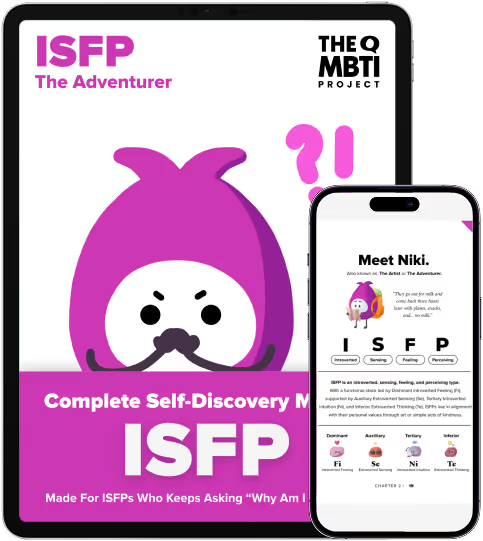
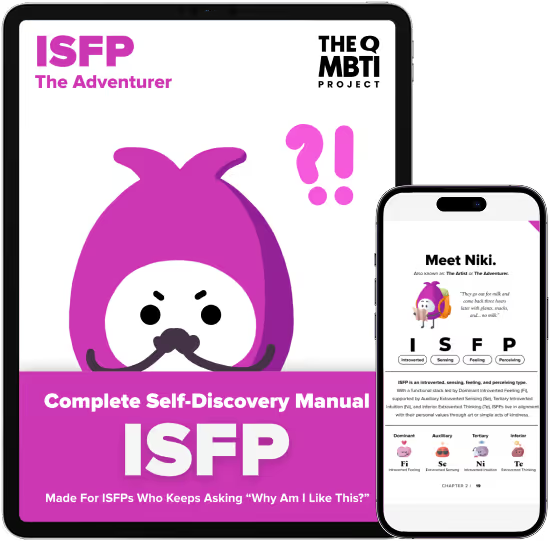
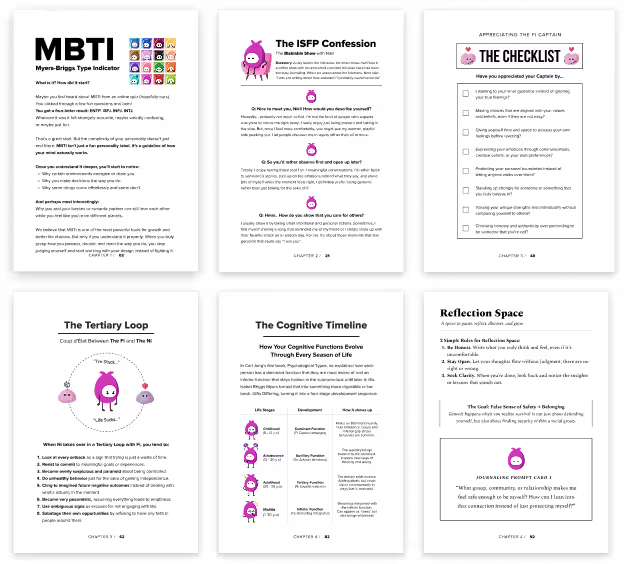
A Complete Self-Discovery Manual For An
ISFP

A Visual Self-Discovery Guide for ISFPs Who Want to Understand Themselves Without Losing Their Authenticity.

Instant access • Visually Structured • Made Specifically for ISFP
Or See What’s Inside?
Thank You!
Your guide is on its way to your inbox.

Please check your email within the next 15 minutes. Don’t forget to check your spam or promotions folder just in case
Continue Exploring
Your Personalized [MBTI] Superpower Guide Is Ready!
We created a free illustrated guide to help you understand [MBTI]'s 5 best natural strengths. The guide will be sent to the email address you entered.
Thank You!
Your guide is on its way to your inbox.

Please check your email within the next 15 minutes. Don’t forget to check your spam or promotions folder just in case
Continue Exploring
Oops! Something went wrong while submitting the form.
------------------------------------------------------------------