Nuna
THE ENTERTAINER
THE ENERGIZER

ESFP

The ESFP personality type is characterized by vibrant presence and a strong engagement with lived experience. As one of the 16 Myers-Briggs personality types, ESFPs make sense of the world through direct experience and emotional spontaneity. They naturally turn everyday moments into personally meaningful ones and engage fully with life as it unfolds.

EXTRAVERTED
SENSING
FEELING
PERCEIVING

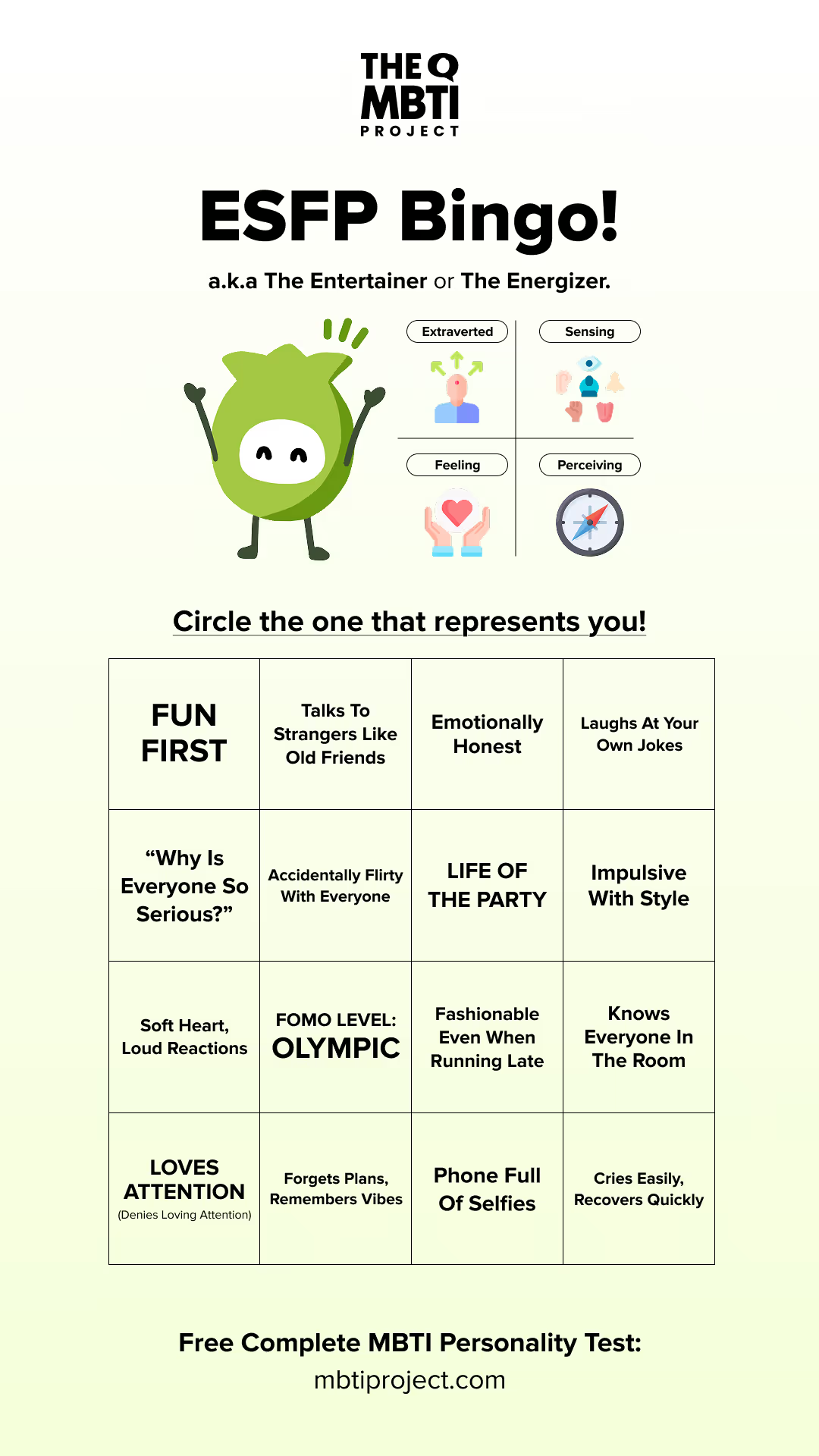
ESFP BINGO!

Think you’re a real ESFP?
Download this ESFP Bingo, mark your squares, and post it on your Stories! Don’t forget to tag @thembtiproject. We’ll feature the best ones!

Download ESFP Bingo

ESFP Introduction

ESFP is an Extraverted (E), Sensing (S), Feeling (F), and Perceiving (P) personality type who understands life by being in it. They are highly attuned to their surroundings, responding naturally to what’s happening in the moment rather than overanalyzing possibilities.

ESFPs are often called The Entertainer or The Energizer because their presence naturally lifts the atmosphere. Their warmth, humor, and emotional sensitivity make everyday moments feel shared, alive, and welcoming.

ESFPs prove that a meaningful life doesn’t always have to be complicated. By fully showing up as themselves, they remind others that being present, expressive, and emotionally honest is already more than enough.

UNFORTUNATELY ACCURATE:

For ESFPs, plans are more of a suggestion. They can go out to buy groceries and somehow come home after a concert, with new clothes they never planned to buy.

Classic ESFP Lines:

“Let’s just do it first! We’ll figure it out later.”

“I swear, the vibe was off. I felt it immediately.”

“I don’t know the reason, I just don’t like it.”

ESFP Strengths

1. Strong Presence & Engagement

ESFPs are fully engaged with what’s happening in the moment. They notice subtle changes in people’s mood and energy, allowing them to respond naturally as situations change.

2. Emotional Authenticity

Guided by their inner values, ESFPs respond from emotional authenticity instead of social obligation. This makes their expressions feel genuine, consistent, and trustworthy.

3. Natural Energy Regulation

ESFPs instinctively lift the energy when things feel flat and soften it when things get tense. Their awareness of the emotional atmosphere helps them create balance wherever they are.

4. Practical Adaptability

Rather than sticking stiffly to plans, ESFPs are more likely to adjust as situations change. This makes them resilient in unpredictable environments where improvisation matters.

5. Genuine Human Connection

ESFPs connect through shared experiences and emotional honesty without pretending. This allows natural connections where people can naturally feel safe being themselves.

6. Meaning-Making

Even a simple hangout or trip becomes meaningful through their presence. ESFPs naturally transform ordinary moments into emotionally memorable experiences.

Your MBTI Superpower!

Download our free 15-page guide to the most underrated strengths of the ESFPs mind

ESFP Weaknesses

1. Difficulty With Long-Term Planning

Future planning can feel too abstract, restrictive, or emotionally tiring for them. ESFPs may postpone thinking ahead until consequences become unavoidable.

2. Impulsivity Under Strong Emotion

When something feels exciting or meaningful, ESFPs may act without fully considering the long-term impact. What feels right in the moment can later conflict with practical reality.

3. Avoidance of Uncomfortable Situations

ESFPs often avoid prolonged emotional discomfort instead of staying with it. As a result, important but difficult conversations may be postponed rather than fully processed.

4. Emotional Reactivity

ESFPs easily absorb the mood and energy of their environment, whether it's positive or negative. Tense or emotionally heavy settings can drain them faster than they expect.

ESFP Relationships

ESFP Communication Style

ESFPs communicate in a lively, passionate, and energetic way. They prefer discussing practical, real-world matters over long abstract theories. Their emotional expressiveness often comes through their tone, facial expression, and body language.

In connecting with others, ESFPs rely less on words alone and more on shared experiences. They bond through doing things together, laughing, exploring, or simply being present in the same moment. Their openness and non-judgmental approach create a relaxed environment where others feel safe showing up authentically.

ESFP Compatibility With Other Personalities

ESFPs tend to connect most naturally with personalities that appreciate meaningful experience, emotional presence, and flexibility. Types like ISFP, ESTP, ENFP, and ESFJ often feel easy to bond with because they share either a similar pace of living or a compatible way of engaging with people and the world around them.With ISFP, the bond comes from mutual emotional authenticity, creating a genuine connection where they can both celebrate each other's individuality. ESTP match ESFP's energy and spontaneity, making the relationship dynamic and action-oriented. With ENFP, the connection blends shared enthusiasm and optimism. ESFJ, known for their empathetic nature, helps create a positive and supportive environments for both of them.

Connections can feel more challenging with highly abstract or future-focused types such as INTJ, INTP, or INFJ. These types may prefer long-term planning or conceptual depth, which can feel draining to ESFPs,  However, with maturity on both sides, these differences can become strengths rather than negative points. ESFPs could bring presence and emotional grounding, while these types offer longer term clarity, structure, and foresight.

ESFP Main Need in Romantic Relationship

ESFPs’ main need in a relationship is emotional presence and shared experience. They feel most secure and loved when their partner is actively engaged by consistently showing up, participating, and responding in both life moments. Time spent together matters more to ESFPs than distant future promises. When a relationship feels alive and genuine, ESFPs naturally become affectionate and fully committed.

ESFP Main Fear in Romantic Relationship

ESFPs’ core relationship fear centers on emotional disconnection and emptiness. They fear being trapped in a dynamic that feels dull or lifeless. Relationships that suppress expression, spontaneity, or closeness can slowly leave them feeling unfulfilled. Being ignored, taken for granted, or labeled as “too much” can hurt deeply, because they simply want to feel genuinely wanted and valued.

ESFP Relationship Blindspots

Blind spots are unnoticed patterns or habits that can create misunderstandings or emotional distance, even when no harm is intended.

BLINDSPOT #1

Using Positivity to Avoid Conflicts

ESFPs prefer relationships to feel light and positive. In trying to maintain that, they may joke around or move past tension too fast. While this keeps things pleasant short-term, it can prevent deeper repair or growth.

BLINDSPOT #2

Overlooking Long-Term Implications

ESFPs may underestimate the importance of long-term planning, boundaries, or conversations. Important relationship decisions can feel fine in the moment while slowly drifting off course underneath.

BLINDSPOT #3

Feeling Unseen Behind The Scene

Despite being expressive, ESFPs may struggle to directly ask for appreciation (even when it is one of their core needs). When their efforts go unnoticed, they can feel taken for granted without knowing how to articulate it.

ESFP Careers

ESFP Ideal Career Life

An ideal career for ESFPs allows them to stay actively engaged with people and their surroundings. They perform best in roles that use their adaptability and emotional awareness to the fullest rather than confining them to repetitive routines or prolonged planning. Fulfillment comes from variety, visible outcomes, and the freedom to respond naturally while expressing authenticity and influencing the emotional tone of their environment.

ESFP Career Stressors

ESFPs experience the most stress in careers that are emotionally flat and lacks meaningful impact. When their work limits interaction or freedom to express, they may also feel trapped or underutilized (even if the role is stable on paper). They are also stressed by environments with constant negativity, as they naturally absorb the emotional atmosphere around them. Workplaces with unclear, disconnected communication and many unspoken expectations will exhaust them fast.

Best Career Paths for ESFP

People-Interaction Centered Careers

Examples: Community Manager, Account Manager, or Front-of-House.
ESFPs shines in roles that involve a lot of direct human interactions. Careers that allow them to engage with a wide range of people, read their emotions, and respond spontaneously keep them energized, present, and motivated.

Experience & Event-Based Work

Examples: Event Organizer, Party Coordinator, or Tour Leader.
Work that involves creating or managing meaningful experiences suits ESFPs well. These roles allow them to stay active, improvise, and influence the emotional atmosphere of a space or special moment.

Creative & Expressive Professions

Examples: Content Creator, Performer, Dancer, Actor, or Host.
ESFPs excel in careers that allow self-expression through direct movement, visuals, or performance. Their ability to be authentic and let that authenticity spread to others is a key driver of fulfillment in this path.

Action-Oriented & Fast-Paced Roles

Examples: Sports & Fitness, Emergency Support, or Production Crew.
Careers that require quick adaptability and hands-on involvement match ESFPs’ natural energy and working style. They perform best where improvised action matters more than prolonged analysis.

Support, Care & Emotional Service Fields

Examples: Childcare, Mental Health Support, Hospitality, After-Service.
ESFPs do well in roles where their responsiveness and emotional awareness can directly support others. Seeing the immediate impact of their warmth and presence is deeply fulfilling for them.

Flexible & Dynamic Careers

Examples: Freelance, Entrepreneurial, Remote / Hybrid Work.
ESFPs are best suited to career paths that allow variety and personal freedom. Work environments that allow flexibility, without excessive rules or procedures, support ESFPs’ long-term engagement.

Careers to Avoid For ESFP

Highly Repetitive & Isolated Roles

Examples: Data Entry, Record Management, or Assembly-Line
Jobs that involve doing the same task for long periods with minimal human interaction can drain ESFPs quickly. When there’s little emotional feedback, their motivation fades fast. Days can start to feel flat and disconnected, even if the work is technically “easy.”

Theory-Heavy Careers With Delayed Impact

Examples: Non-Applied Academic Research or Theoretical Economics.
ESFPs understand life through experience, not abstraction. In roles where results are delayed and meaning is intellectual rather than lived, ESFPs may struggle to feel connected to what they’re doing. ESFPs need to see and feel the impact of their efforts in a direct, practical way.

Procedure or Rule-Driven Environments

Examples: Highly Bureaucratic Roles, Administrative, Internal Auditing.
Highly structured systems with strict procedures and limited flexibility can feel suffocating. When there’s no space to improvise, they can start to feel that their strengths are underused. Over time, this can make them feel less like themselves at work.

High-Stakes, Performance-Only Metrics

Examples: Cold-Call Sales, Prop Trading, or Commission-Only Sales.
Careers that reduce success purely to numbers, quotas, or output (without relational or emotional involvement) can be stressful for ESFPs. They may push themselves hard at first, but prolonged emotionally detached pressure can make work feel dehumanizing over time.

Real ESFP Examples

Real Human ESFP

Elvis Presley
(King of Rock 'n' Roll)

“Do something worth remembering.”

“Values are like fingerprints. Nobody's are the same, but you leave 'em all over everything you do”

Bruno Mars
(Singer-Songwriter)

"I think that success is having fun."

"You know, I just do whatever feels right to me! And so that's what you're gonna get!"

Katy Perry
(Singer-Songwriter)

"Be yourself. That's what makes the world go round!"

"If you're presenting yourself with confidence, you can pull off pretty much anything."

Earvin “Magic” Johnson
(Basketball Legend)

"All kids need is a little help, a little hope and somebody who believes in them."

"Just celebrate the life you had, not the life you could've had."

Fictional ESFP Characters

Monkey D. Luffy
(One Piece)

"I don’t want to conquer anything. I just think the guy with the most freedom in this whole ocean… is the Pirate King!"

"Power isn’t determined by your size, but the size of your heart and dreams."

Seong Gi-hun
(Squid Game)

"You don’t trust people because they are trustworthy. You do it because you have nothing else to rely on"

"We are not horses, we are Humans"

Ronald "Ron" Weasley
(Harry Potter)

"Don’t let it worry you. It’s me. I’m extremely famous.”

“Bloody Hell!”

Peter Quill "Star-Lord"
(Guardians of The Galaxy)

"Dance Off, Bro!"
"It's Showtime A-holes!"
"I don't learn. It's one of my issues."

Common ESFP Mistypes

1. ENFP - Nemo

Why ESFPs mistype as ENFPs:

  • Both are emotionally expressive, enthusiastic, and warm.
  • When ESFPs talk about their personal interpretation of feelings, it is often mistaken for abstract, intuition-driven perception, which more closely resembles ENFP characteristics.

Key Differences:

  • ESFP (Se Dominant): Focuses on what is happening right now and responds to real, physical experiences.
  • ENFP (Ne Dominant): Focuses on possibilities, patterns, and what could be.
  • ESFPs find meaning through living experiences. ENFPs explore meaning through ideas and concepts exploration.
See ENFP's Profile
2. ESTP - Nion

Why ESFPs mistype as ESTPs:

  • Both are action-oriented, spontaneous, and present-focused.
  • ESFPs can also be bold and decisive, which looks like Thinking-dominant behavior on the surface.

Key Differences:

  • ESFP (Se Dom & Fi Aux): Decisions are filtered through personal values and emotional alignment.
  • ESTP (Se Dom & Ti Aux): Decisions are filtered through personal logic and reasoning consistency.
  • ESFPs tend to react more strongly to emotional insensitivity, whereas ESTPs are more triggered by logical inconsistencies.
See ESTP's Profile
3. ESFJ - Nyra

Why ESFPs mistype as ESFJs:

  • ESFPs’ auxiliary Fi can appear socially warm, caring, and attentive, which often resembles ESFJs’ Fe-dominant behavior.
  • Their ability to read the emotional atmosphere is also often mistaken for Fe (Extraverted Feeling).
  • In group settings, both ESFPs and ESFJs tend to be people-focused and emotionally supportive.

Key Differences:

  • ESFP (Fi Dominant): Responds based on internal emotional values and authenticity.
  • ESFJ (Fe Dominant): Responds based on external emotional harmony and social expectations.
  • ESFPs prioritize personal authenticity over social conformity, whereas ESFJs focus on preserving shared values and social harmony.
See ESFJ's Profile
Cognitive Functions Test

Specifically Designed to Navigate Mistypes

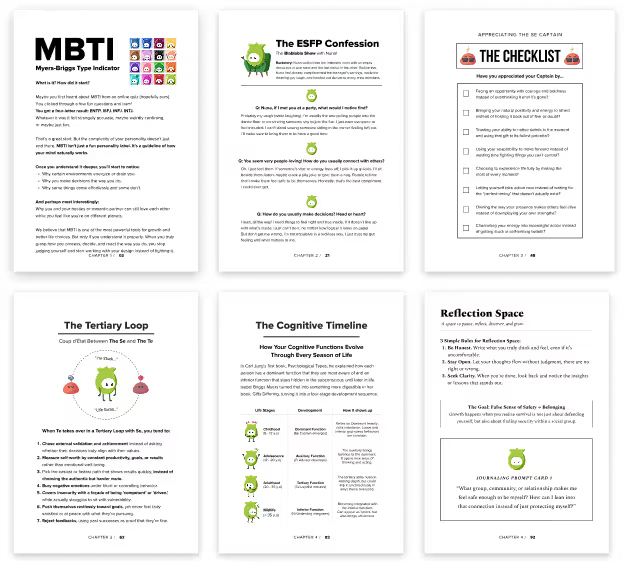
A Complete Self-Discovery Manual For An
ESFP

A Visual Self-Discovery Guide for ESFPs Who Love to Live Fully While Moving Toward What Truly Matters to Them.

Instant access • Visually Structured • Made Specifically for ESFP
Or See What’s Inside?
Thank You!
Your guide is on its way to your inbox.

Please check your email within the next 15 minutes. Don’t forget to check your spam or promotions folder just in case
Continue Exploring
Your Personalized [MBTI] Superpower Guide Is Ready!
We created a free illustrated guide to help you understand [MBTI]'s 5 best natural strengths. The guide will be sent to the email address you entered.
Thank You!
Your guide is on its way to your inbox.

Please check your email within the next 15 minutes. Don’t forget to check your spam or promotions folder just in case
Continue Exploring
Oops! Something went wrong while submitting the form.
------------------------------------------------------------------