NION
THE DYNAMO
THE ENTREPRENEUR

ESTP

The ESTP personality type is characterized by bold action and responsive instincts that guide their daily decisions. As one of the 16 Myers-Briggs personality types, ESTPs trust their senses to assess immediate opportunities and risks. They move quickly and respond fast to what’s right in front of them, preferring direct action over speculation about what might happen later.

EXTRAVERTED
SENSING
THINKING
PERCEIVING
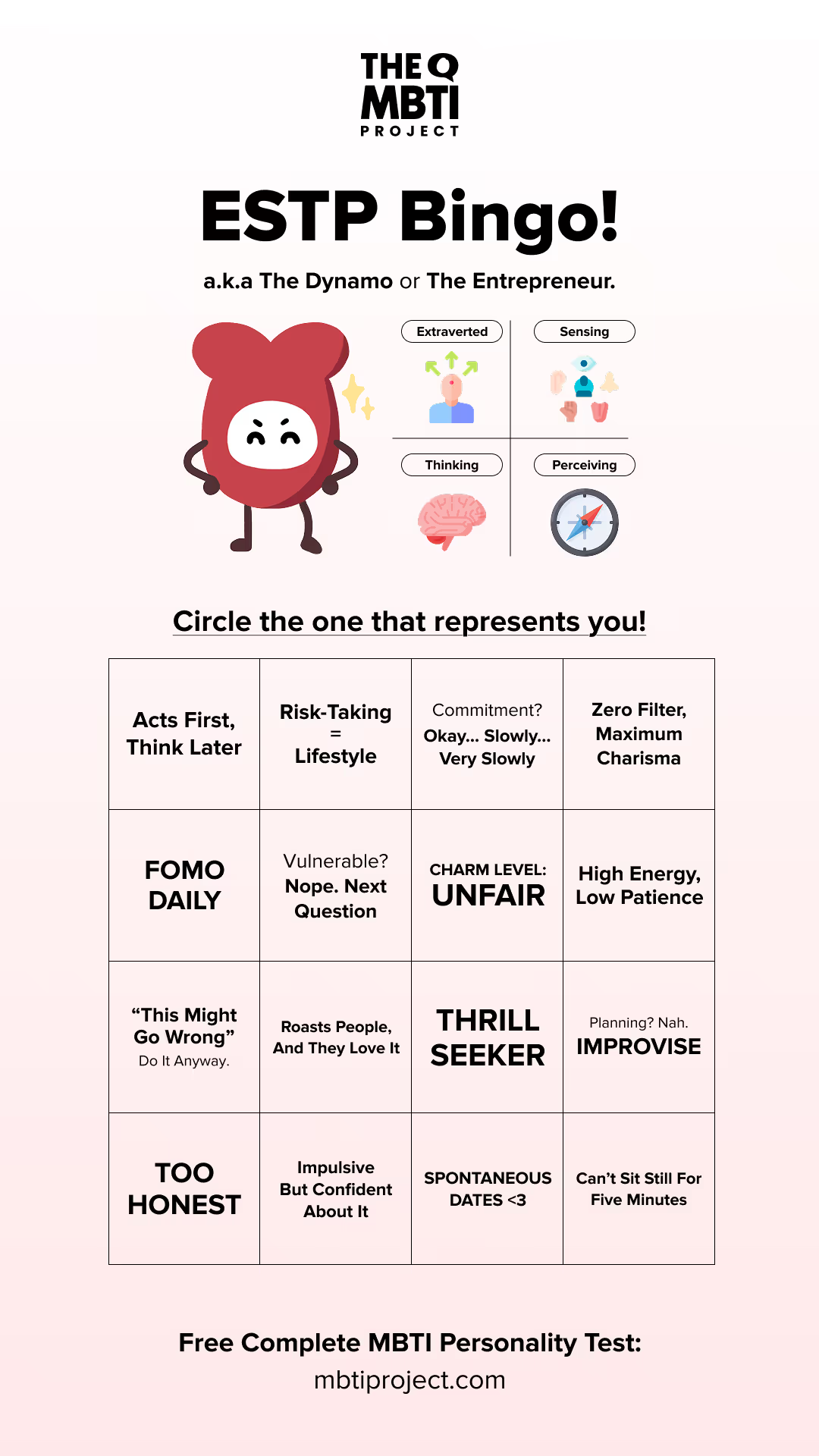
ESTP BINGO!

Think you’re a real ESTP?
Download this ESTP Bingo, mark your squares, and post it on your Stories! Don’t forget to tag @thembtiproject. We’ll feature the best ones!

Download ESTP Bingo

ESTP Introduction

ESTP is an Extraverted (E), Sensing (S), Thinking (T), and Perceiving (P) personality type known for an action-oriented approach to life and a high awareness of the present moment.

Known as “The Dynamo,” ESTPs are especially skilled at reading situations as they unfold. They trust their sharp instincts and practical logic to move fast and adapt even faster.

Most ESTPs learn best by doing, responding directly to what’s actually happening rather than what’s hypothetical. Wherever momentum is needed, ESTPs are usually the ones pushing things forward.

UNFORTUNATELY ACCURATE:

ESTPs can handle high-pressure situations insanely well, but when things become stable, they are bored to death (until chaos returns).

Classic ESTP Lines:

"I’ll deal with it when it becomes a problem.”

“I didn’t ignore the plan… I improved it."

“You think too much... We’ll figure it out on the spot.”

ESTP Strengths

1. Real-Time Awareness

ESTPs are deeply connected to present moment. They pick up changes around them faster than most, helping them to respond quickly rather than getting caught off guard.

2. Effective Under Pressure

When things go wrong, they actually become more focused, decisive, and clear-headed. ESTPs often performing best when stakes are high and timing matters.

3. Practical Problem Solving

Instead of untested theories, ESTPs focus more on what actually works. They find simple, effective solutions based on real conditions.

4. Adaptability & Flexibility

Because they don’t overcommit to rules & expectations, ESTPs pivot effortlessly when plans change and new information appears.

5. Rapid Executions

Once they see an opportunity or problem, they move and adjust quickly rather than waiting for perfect certainty. This makes them invaluable in fast-moving unpredictable environments.

6. Energetic Presence

Their natural action-oriented mindset pushes teams, conversations, and projects forward, especially when things feel stuck.

Your MBTI Superpower!

Download our free 15-page guide to the most underrated strengths of the ESTPs mind

ESTP Weaknesses

1. Impatience

ESTPs can be frustrated with long discussions that don’t lead to immediate action. They may disengage even if deeper thinking is actually what's neceessary

2. Impulsivity & Recklessness

Their fast thinking and confidence can sometimes lead to premature decisions, creating problems that could have been prevented with more consideration.

3. Avoid Long-Term Planning

ESTPs trust their ability to adapt and adjust, which often works well in the short term but can cause last-minute stress and problems in the long run.

4. Discomfort With Emotional Complexity

ESTPs may struggle with emotional problems that don’t have clear solutions. They might unintentionally rush emotional conversations that require patience rather than fixes.

ESTP Relationships

ESTP Communication Style

ESTPs speak directly and confidently, using concise language and focusing on what’s happening in the moment. They prefer conversations that lead to clear decisions or outcomes. They process information through direct experience, and because of this, they favor examples, demonstrations, and direct engagement over conceptual debate. Conversations with ESTPs tend to move quickly toward immediate next steps rather than speculative, long explanations.

ESTP Compatibility With Other Personalities

ESTPs tend to connect best with people who balance their speed and realistic nature. They often work well with Introverted Judging types such as ISTJ, ISTJ, INFJ, and INFJ. These types help ground ESTPs with long-term direction without stifling their adaptability. High-energy compatibility is often found with ESFPs and ENTPs, where connection is built on spontaneity and momentum.

More challenging but growth-oriented matches include INTPs and INFPs. INTPs prefer deep analysis before acting, which can frustrate ESTPs but also teach them to think things through. INFPs lead emotional values, which may feel intangible to ESTPs. But with mutual understanding and respect for differences, even challenging pairings can become deeply strengthening relationships.

ESTP Main Need in Romantic Relationship

ESTPs need relationships that give them freedom while staying connected through shared experiences. They feel closest when they can do things together, face situations side by side, and move through life as a team. Even if they sometimes struggle to put their emotions into words, with patience and understanding, they will gradually start to open up emotionally.

ESTP Main Fear in Romantic Relationship

ESTPs’ main fear in relationships is losing their sense of freedom and feeling controlled. They worry about being judged for acting in the moment or being pressured into expectations that disconnect them from their personal life. When a relationship starts to feel restrictive or demanding too early, ESTPs may pull away out of feeling suffocated and fearing the loss of their sense of self.

ESTP Relationship Blindspots

Blind spots are unnoticed patterns or habits that can create misunderstandings or emotional distance, even when no harm is intended.

BLINDSPOT #1

Rushing Emotional Processing

ESTPs tend to move on quickly once a situation seems resolved. They may not realize their partner’s need for  more time to process what happened.

BLINDSPOT #2

Minimizing Consequences

ESTPs could underestimate how small, repeated choices affect long-term emotional security. What feels harmless in the moment may slowly create uncertainty for their partner.

BLINDSPOT #3

Avoiding Emotional Conversations

ESTPs prefer conversations that lead to immediate solutions. So, emotionally heavy talks without a clear fix can feel draining for them. As a result, they may avoid important discussions.

ESTP Careers

ESTP Ideal Career Life

ESTPs are energized by practical challenges and roles that let them make an immediate impact while staying flexible as conditions change. They excel in environments that give them room to act and respond to real situations rather than just simply following procedures blindly. When their work offers autonomy and immediate feedback, ESTPs stay motivated and fully engaged.

ESTP Career Stressors

ESTPs tend to feel most stressed in careers where momentum is slow and action is constantly delayed. They also struggle in roles with little autonomy, where their decisions are closely monitored. When work involves prolonged emotional drama or lacks visible results, ESTPs can quickly experience frustration and burnout.

Best Career Paths for ESTP

Entrepreneurship & Business Operations

Examples: Startup founder (F&B, retail, logistics) or Field Ops Manager.
ESTPs perform best in fast-paced settings where quick decisions and adjustments are essential. They’re strong executors and skilled on turning ideas and plans into real outcomes.

Sales & Negotiation

Examples: Field Sales Executive, Real Estate Agent, or Procurement.
With their strong situational awareness, charisma, and confidence, ESTPs are natural persuaders. They read people well, and close opportunities through direct interaction rather than relying on scripted pitches.

Sports & Competition-Based Careers

Examples: Professional Athlete, Sports Coach, or Fitness Trainer.
Careers that involve physical engagement and competition suit ESTPs well. They grow by pushing their limits, learn through challenge, and become even more energized in competitive environments.

Logistics & Crisis Management

Examples: Event Operations Manager or Supply Chain Field Supervisor.
ESTPs excel at coordinating people and resources on the spot. When delays or unexpected issues arise, ESTPs adapt quickly and focus on practical solutions instead of getting stuck or blaming others.

Hands-On & Field-Based Work

Examples: Field Engineer, Automotive Mechanic, or Outdoor Guide.
ESTPs do well in careers that involve practical problem-solving, where results are visible and feedback is immediate. They apply technical knowledge directly in the field, adapting to each site’s specific conditions.

Emergency Services & Tactical Roles

Example: Firefighter, Paramedic, Police Tactical Unit, Search & Rescue.
High-stakes environments bring out the ESTP’s best qualities. They stay calm under pressure, while making quick, accurate decisions. These traits make them a strong fit for roles that require immediate response such as paramedic, firefighter, or security-related careers.

Careers to Avoid For ESTP

Isolated & Repetitive Desk Jobs

Examples: Data Entry, Back-Office Admin, Payroll Processing Officer.
Roles that involve the same tasks every day (such as data entry or administrative work) can feel lifeless to ESTPs, especially one that require long periods of solitary work with little to no real human interaction.

Purely Theoretical Research Roles

Examples: Philosophy Lecturer or Theoretical Economist.
Careers centered on abstract thinking for a long period of time (such as academic research with slow feedback cycles) can frustrate ESTPs really fast. They struggle when results aren’t visible in the near term or couldn't be translated into real-world application.

Emotionally-Heavy Support Careers

Examples: Clinical Psychologist, Grief Counselor, or Trauma Therapist.
Positions centered on emotional processing, like long-form counseling or therapeutic support work, can be exhausting for ESTPs. They prefer helping by doing something, not just sit with feelings indefinitely.

Micromanaged Bureaucratic Environments

Examples: Government Administrator or Corporate Compliance Officer.
Highly bureaucratic systems with layers of approval and resistance to change, could limit the ESTP’s natural adaptability. When momentum and progress are blocked by procedures, their engagement drops quickly.

Real ESTP Examples

Real Human ESTP

Conor McGregor
(MMA Fighter)

Confidence under pressure, competitive by nature, and able to dominate in critical moments.

Chris Hemsworth
(Film Actor)

Socially presence, engaged, and spontanious. Excelling in roles that demand situational responsiveness.

Theodore Roosevelt
(Former U.S. President)

Known for an action-first leadership style, hands-on governance, and preference for direct involvement.

Stephen Curry
(Basketball Player)

Combines insanely good physical awareness with fast decision-making, adapting effectively to defensive pressure with precision.

Fictional ESTP Characters

Rocket Racoon
(Guardians of Galaxy)

Hyper-reactive and fearless. Rocket solves problems on the fly with tools and sharp situational logic, often improvising in the middle of chaos.

Han Solo
(Star Wars)

Han embodies the ESTP’s street smarts and decisiveness. Han trusts his instincts and adapting instantly when things go wrong.

Inosuke Hashibira
(Demon Slayer)

Built for close-quarters combat, Inosuke fights on pure instinct, often charging ahead without considering the consequences.

Merida
(Brave – Pixar)

Merida operates best with freedom of movement and physical mastery, showing little concern for tradition to dictate her choices.

Common ESTP Mistypes

1. ESFP - Nuna

Why ESTPs mistype as ESFPs:

  • Both lead with Se (Extraverted Sensing), so they look equally energetic, spontaneous, and present-focused.
  • ESTPs can also appear emotionally expressive and socially warm, just like ESFPs
  • Many tests oversimplify people-oriented behavior as purely Feeling.

Key Differences:

  • ESTP (Ti Auxiliary): Evaluates situations through internal logic and effectiveness by asking “Does this work?”
  • ESFP (Fi Auxiliary): Evaluates situations through internal values and personal meaning by asking “Does this feel right?”
  • ESTPs prioritize logical efficiency, while ESFPs prioritize emotional alignment and authenticity.
See ESFP's Profile
2. ENTJ - Nico

Why ESTPs mistype as ENTJs:

  • ESTPs can appear decisive, assertive, and commanding, especially under pressure (similar to ENTJs)
  • In leadership or crisis situations, ESTPs may become more authoritative due to their high-energy and practicality.
  • Many tests equate confidence and directness with Te dominance (ENTJ leads with Te)

Key Differences:

  • ESTP (Se Dom & Ti Aux): Responds to things as it unfolds, adapting moment by moment.
  • ENTJ (Te Dom & Ni Aux): Acts according to a long-term strategy and predefined objectives.
  • ESTPs improvise first and adjust later. ENTJs plan first and execute with a clear vision.
See ENTJ's Profile
3. ISTP - Navi

Why ESTPs mistype as ISTPs:

  • Both share Ti and Se that enjoy hands-on problem-solving and tactical work.
  • ESTPs can appear quiet and focused when fully engaged in their work, which resembles 'introversion' behaviour.

Key Differences:

  • ESTP (Se Dominant): Acts outwardly and engages immediately with the environment.
  • ISTP (Ti Dominant): Thinks first, then acts once internal logic is satisfied.
  • ESTPs prioritize stimulation and movement, while ISTPs prioritize internal clarity.
See ISTP's Profile
Cognitive Functions Test

Specifically Designed to Navigate Mistypes

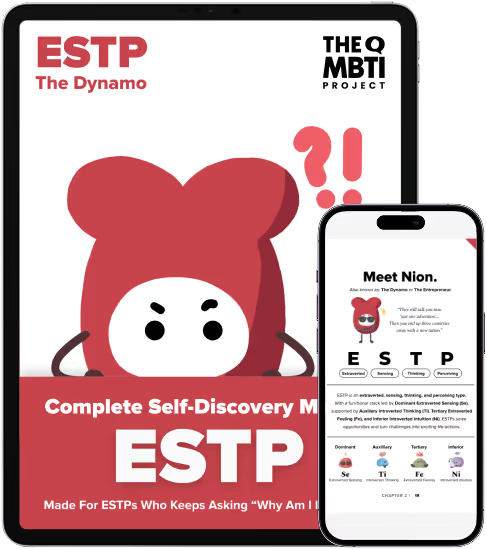
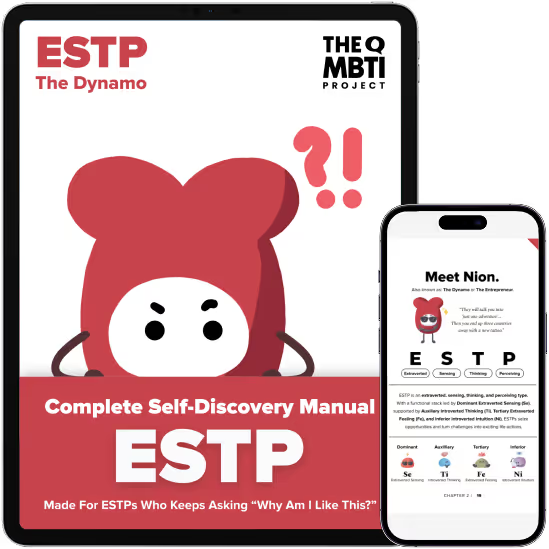
A Complete Self-Discovery Manual For An
ESTP

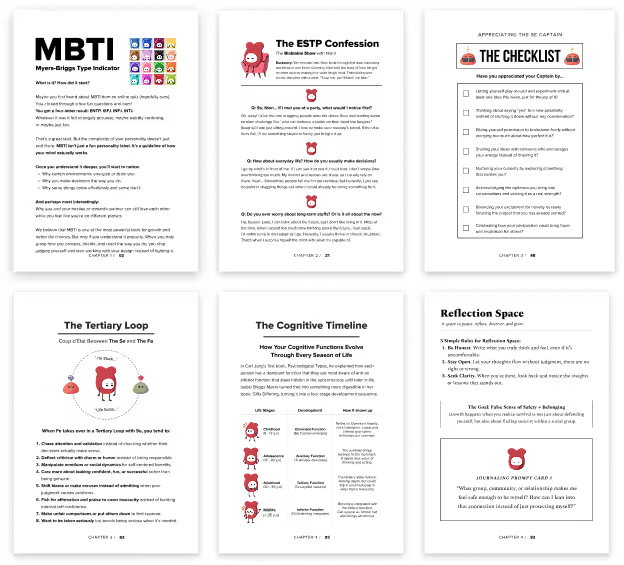
A Visual Self-Discovery Guide for ESTPs Who Want to Stop Moving Fast in the Wrong Direction.

Instant access • Visually Structured • Made Specifically for ESTP
Or See What’s Inside?
Thank You!
Your guide is on its way to your inbox.

Please check your email within the next 15 minutes. Don’t forget to check your spam or promotions folder just in case
Continue Exploring
Your Personalized [MBTI] Superpower Guide Is Ready!
We created a free illustrated guide to help you understand [MBTI]'s 5 best natural strengths. The guide will be sent to the email address you entered.
Thank You!
Your guide is on its way to your inbox.

Please check your email within the next 15 minutes. Don’t forget to check your spam or promotions folder just in case
Continue Exploring
Oops! Something went wrong while submitting the form.
------------------------------------------------------------------