NYRA
THE HOST
THE CAREGIVER

ESFJ

The ESFJ personality type is characterized by strong social awareness and deep attentiveness to people’s emotional and practical needs. As one of the 16 Myers-Briggs personality types, ESFJs are highly sensitive to the emotional atmosphere around them and often take responsibility for maintaining harmony in their environment. They love to create spaces where others feel safe, valued, supported, and genuinely included.

EXTRAVERTED
SENSING
FEELING
JUDGING
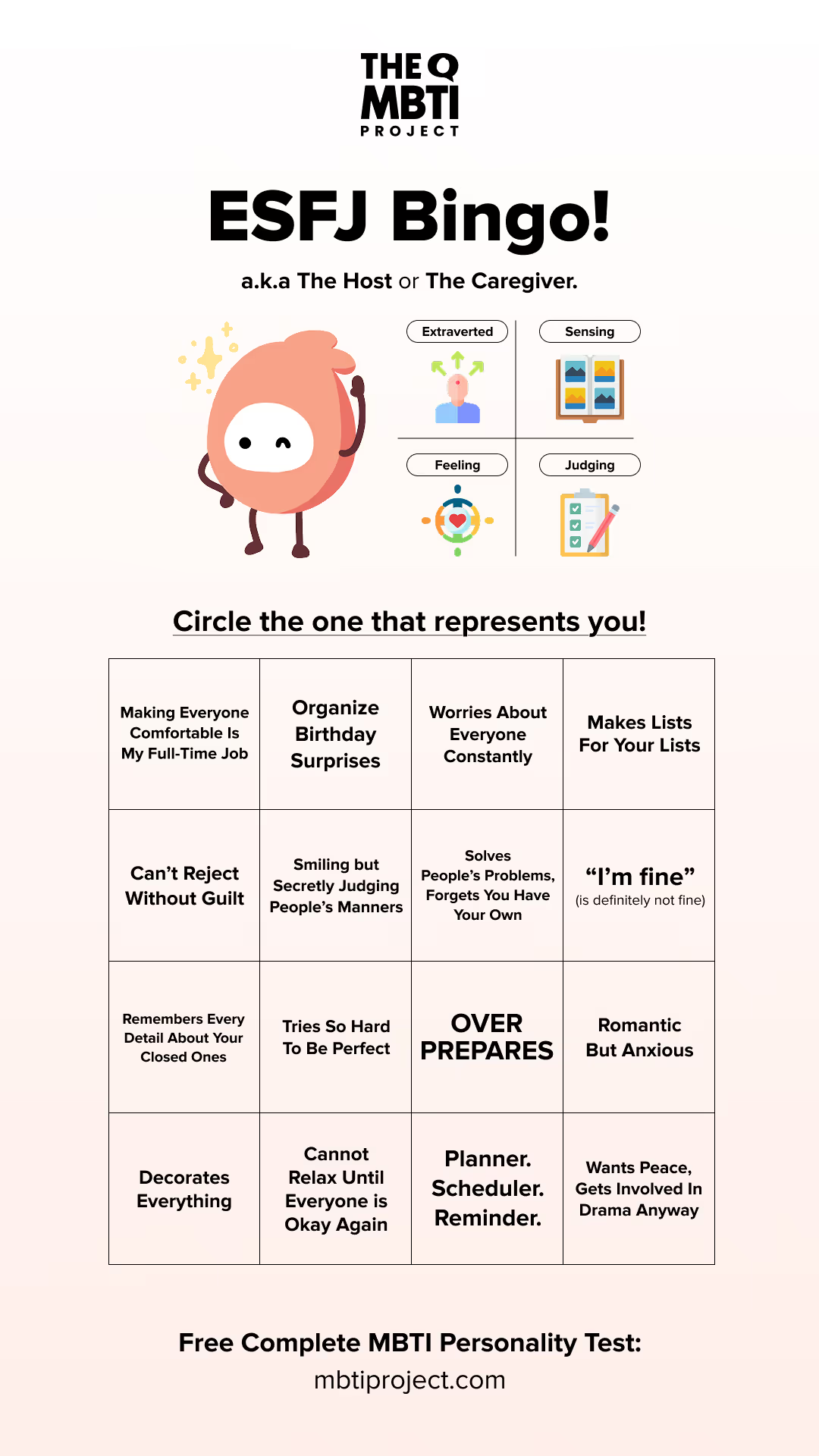
ESFJ BINGO!

Think you’re a real ESFJ?
Download this ESFJ Bingo, mark your squares, and post it on your Stories! Don’t forget to tag @thembtiproject. We’ll feature the best ones!

Download ESFJ Bingo

ESFJ Introduction

ESFJ is an Extraverted (E), Sensing (S), Feeling (F), and Judging (J) personality type who instinctively track people’s emotions and social dynamics in their environment. They have a natural orientation toward connection and harmony, often organizing life around maintaining stability for the people they care about.

ESFJs are often called The Caregiver because they express care through concrete actions, such as remembering what matters to others, consistently being present, and taking care for others’ well-being.

They are also often called The Host because of their instinct to manage social environments. ESFJs naturally monitor group comfort by noticing when someone feels left out, gently drawing them in, and creating environments where everyone feels they belong. Psychologically, they tend to feel responsible for the emotional tone of shared spaces.

Fundamentally, ESFJs are not merely “nice” (even though they really are). They are emotionally intelligent stabilizers who build strong communities through consistent reliability and interpersonal awareness.

UNFORTUNATELY ACCURATE:

ESFJs are experts at understanding others’ emotional needs — except when it comes to their own. They can give and give until care turns into resentment when it isn’t reciprocated.

Classic ESFJ Lines:

"Is everyone feeling okay? Please tell me if there’s anything you need."

"It’s not a big deal. I just want to help."

"Wait, let me organize this so it’s easier for everyone."

ESFJ Strengths

1. High Emotional Awareness

ESFJs easily sense when someone feels left out, when someone feels uneasy, and when the emotional tone changes. This sensitivity allows them to respond quickly and appropriately.

2. Consistent Reliability & Follow-Through

When ESFJs say they’ll do something, they truly mean it. They deeply value responsibility and consistency, which is why people often trust them for their dependability.

3. Practical Care & Support

ESFJs remember the little things, anticipate people's needs, and take care of the details to make life easier for everyone. Their care feels real because it shows through practical actions.

4. Natural Community-Building Ability

ESFJs are very skilled at creating a sense of belonging to make everyone feels included and valued. That’s why they often become the glue that holds friendships, teams, and families.

5. Social Responsibility & Conscientiousness

ESFJs take their roles seriously, whether as a friend, leader, sibling, parent, teammate, or professional. They naturally consider how their actions affect others emotionally.

6. Long-Term Emotional Endurance

ESFJs are able to hold emotional space for others over long periods. They can remain present through stress and conflict, especially when the bond feels worth protecting.

Your MBTI Superpower!

Download our free 15-page guide to the most underrated strengths of the ESFJs mind

ESFJ Weaknesses

1. Over-Prioritizing Others at the Cost of Self

ESFJs can become so focused on others’ needs that they neglect their own. Over time, this can leave them emotionally exhausted and unsure of what they truly want.

2. Strong Sensitivity to Approval and Validation

Because they naturally track external feedback, ESFJs can become overly influenced by others’ emotional reactions. When appreciation is missing, they may begin to doubt themselves.

3. Conflict Avoidance That Delays Necessary Truth

ESFJs often prioritize harmony so strongly that they may avoid difficult conversations. This can allow resentment to build internally while problems remain unresolved.

4. Difficulty Letting Go of Familiar Roles or Systems

ESFJs may cling tighly to familiar routines, traditions, or identities (such as being “the helper” or “the reliable one”), even when those roles are no longer healthy or sustainable.

ESFJ Relationships

ESFJ Communication Style

ESFJs tend to communicate in ways that are considerate, structured, and socially appropriate. They naturally adjust their words, expressions, and delivery based on how others seem to be feeling. As highly responsive listeners, they engage actively through eye contact and affirmation, which helps people feel seen and acknowledged.

ESFJs value politeness and tend to avoid language that feels harsh, awkward, or socially disruptive. This makes them reliable communicators in formal settings such as work, family gatherings, and leadership roles, but it can also make them uncomfortable with overly blunt or chaotic communication styles.

When ESFJs speak, they consider not only whether something is true, but also whether it will land safely and respectfully. They naturally evaluate concerns such as: Will this hurt someone? Will this create tension? Will this feel awkward? This makes them strong mediators in conflict, but it can also cause them to hold back their real thoughts when they’re afraid of disrupting harmony.

ESFJ Compatibility With Other Personalities

ESFJs tend to feel most naturally compatible with types that appreciate relational structure and emotional stability. ISFJ, ENFJ, and ISTJ tend to match this energy well because they respect commitment and take responsibility seriously. These types understand the importance of intentional, considerate communication, which helps interactions feel safe and validating.

Types like ESFP and ISFP can also complement ESFJs by bringing warmth and lightness without threatening emotional harmony. In these dynamics, ESFJs usually feel appreciated for their care rather than judged for it, which reinforce mutual authenticity and genuine connection to grow.

ESFJs often experience the most friction with highly independent, emotionally detached, or confrontation-heavy types such as INTP, INTJ, ISTP, and sometimes ENTP. These types tend to prioritize autonomy and direct truth over emotional consideration, which can unintentionally feel dismissive to ESFJs. In response, ESFJs may perceive them as insensitive, while these types may feel constrained by ESFJs’ relational expectations.

However, these pairings aren’t destined to fail. They simply require growth on both sides. ESFJs grow most when they learn not to personalize others’ communication styles and to express their needs more directly. In turn, thinking-oriented types grow when they recognize that emotional awareness is not weakness but a form of intelligence. With mutual respect, these differences can become complementary rather than conflicting.

ESFJ Main Need in Romantic Relationship

ESFJs’ core relationship need is emotional safety and consistency. They feel most fulfilled in relationships where care is expressed through steady presence and mutual effort. ESFJs naturally invest deeply in others, so they need partners who acknowledge that effort and take the relationship seriously rather than for granted. What they need most is the certainty that they are valued and emotionally secure over time.

ESFJ Main Fear in Romantic Relationship

ESFJs’ deepest fear in relationships is giving their whole heart and realizing it was not truly valued. They fear that their effort may not truly matter to the person they love. Emotional distance or inconsistency can hurt deeply, not just as disappointment, but as a threat to their sense of security. The deepest fear emerges when the relationship becomes one-sided, that they're the only one still fully present in the relationship.

ESFJ Relationship Blindspots

Blind spots are unnoticed patterns or habits that can create misunderstandings or emotional distance, even when no harm is intended.

BLINDSPOT #1

Over-identifying with the Relationship Role

ESFJs can become so invested in being “the good partner” or “the supportive one” that they lose flexibility in how they show up. They may continue performing the role even when the relationship dynamic has shifted.

BLINDSPOT #2

Confusing Being Needed Vs Loved

ESFJs often express love through usefulness and support, which can lead them to unconsciously equate being needed with being valued. This can pull partners who rely heavily on their care but don’t give much in return.

BLINDSPOT #3

Struggling to Trust Love Without 'Drama'

ESFJs are so used to managing emotional dynamics that they can feel uneasy in relationships that feel too calm or low-intensity. If a partner expresses love in a quieter way, they may worry that the connection is fading.

ESFJ Careers

ESFJ Ideal Career Life

An ideal career life for ESFJs allows them to combine human connection with clear structure and visible impact. They are most fulfilled in environments that value consistency and contribution, where their effort is recognized and leads to meaningful outcomes for others. ESFJs also work best when expectations are clearly communicated and their role allows them to support and coordinate in ways that improve group functioning.

ESFJ Career Stressors

ESFJs tend to experience the most career stress in environments where effort is invisible or treated as replaceable. They invest a lot of their time and emotional energy into their work, so a lack of recognition can feel especially discouraging. They may continue fulfilling their duties while secretly accumulating resentment and exhaustion.

Another major stressor for ESFJs is unclear workplace structure or constantly changing expectations. They perform best in environments with defined roles and standards. In poorly organized settings, especially those without explanation, ESFJs can feel anxious and struggle to understand how to contribute effectively.

Best Career Paths for ESFJ

People-Centered Service & Support Roles

Examples: Social Worker, Case Manager, or NGO Program Staff.
These roles align strongly with ESFJs’ natural drive to care for others in practical and visible ways. ESFJs feel most fulfilled when their effort directly improves someone’s life. Service roles give them immediate emotional feedback and a strong sense of being genuinely helpful.

Education, Training & Development

Examples: Teacher, School Counselor, or Academic Coordinator.
Development roles align with ESFJs because they integrate interpersonal engagement with structured progress. ESFJs are energized by guiding others toward growth while maintaining stable learning environments. The long-term relationships built in these roles feel especially fulfilling to them.

Healthcare, Wellness & Care Coordination

Examples: Nurse, Medical Assistant, or Patient Care Coordinator.
Healthcare and wellness fields suit ESFJs because they value emotional attentiveness within structured systems. Environments such as hospitals, clinics, and rehabilitation centers allow ESFJs to express care through clear protocols while remaining focused, resilient, and grounded.

Hospitality & People-Facing Roles

Examples: Hospitality Manager, Event Planner, or Community Manager.
ESFJs perform well in environments that prioritize comfort and experience quality. Their instinctive emotional awareness allows them to manage social dynamics and create welcoming atmospheres, which are skills that are highly valued in these industries.

Organizational & Administrative Roles

Examples: Project Coordinator, Executive Assistant, or Office Manager.
These roles align with ESFJs’ natural strengths to coordinate people and processes. Their ability to identify needs within structured environments is exceptional. The predictability of these careers helps reduce stress while giving them a strong sense of contribution.

Values-Driven Leadership & Management

Examples: Department Leader, School Administrator, Program Director.
ESFJs tend to be strongest leaders in environments that value stability and growth over aggressive competition. Their leadership style emphasizes trust-building, fairness, and team cohesion. As a result, they create emotionally safe teams where steady performance becomes possible.

Careers to Avoid For ESFJ

Isolated, Minimal Human Interaction Roles

Examples: Back-End Programmer, Isolated Researcher, Solo Contractor
Careers that require long periods of solitary work with little relational feedback can drain ESFJs quickly. Without regular human interaction, their motivation drops and their strengths go underused.

Aggressively Competitive Environments

Examples: High-Pressure, Commission-Only Sales with Ranking Wars.
Workplaces filled with constant comparison or “winner-takes-all” dynamics tend to clash with ESFJ personal values. ESFJs may feel morally conflicted, while pressured to act against their natural cooperative instincts.

Emotionally Detached & Harsh Cultures

Examples: Abrasive Tech Team or Emotionless Corporate Environment.
Workplaces that normalize harsh or dismissive communication often feel deeply uncomfortable for ESFJs. Even if the tasks are manageable, the emotional atmosphere can make them feel constantly on edge.

Roles With Constant Shifting Expectations

Examples: Poorly Managed Startups or Crisis-Driven Operations.
Careers with unclear responsibilities and frequent last-minute changes can be especially stressful for ESFJs. Without stable structure and expectations, they may overcompensate by taking on too much responsibility, leading to anxiety and burnout.

Real ESFJ Examples

Real Human ESFJ

Taylor Swift
(American Singer-Songwriter)

“We don't need to share the same opinions as others, but we need to be respectful."

“No matter what happens in life, be good to people. Being good to people is a wonderful legacy to leave behind.”

Joe Biden
(Former US President)

“Our future cannot depend on the government alone. The ultimate solutions lie in the attitudes and the actions of the American people."

“The greatest gift is the ability to forget - to forget the bad things and focus on the good."

Millie Bobby Brown
(British Actress & Model)

“I don't care what I look like; it's how people think of me. And I do care how people think of me. I want people to say, 'Oh, she's nice,' rather than, 'Oh, she's so pretty.'"

“At the end of the day, I just do my job. I love my art. But I genuinely want to change the world. I'm very generous, and I really want people to see that I am - that's really it."

John Cena
(American Actor & Wrestler)

"Be loyal to those who are loyal to you. And respect everyone, even your enemies and competition."

"A man’s character is not judged after he celebrates a victory, but by what he does when his back is against the wall."

Fictional ESFJ Characters

Cassie Howard
(Euphoria)

"Maybe people are nostalgic about high school 'cause it's, like, the last time in their life that they get to dream."

"I feel like love is super dark and no one ever talks about it."

Katara
(Avatar: The Last Airbender)

"I will never, ever turn my back on people who need me!"

"I know sometimes it hurts more to hope and it hurts more to care, but you have to promise me that you won't stop caring."

Ochako Uraraka “Uravity”
(My Hero Academia)

"Everyone is giving all they can, which only makes it fair that I do the same."

"When I saw him struggling with the odds stacked against him. It got me thinking. Who protects the heroes when they need protecting?"

SpongeBob SquarePants
(SpongeBob SquarePants)

"If you believe in yourself, with a tiny pinch of magic, all your dreams can come true!"

"No one can change a person, but someone can be a reason for that person to change"

Common ESFJ Mistypes

1. ENFJ - Nori

Why ESFJs mistype as ENFJs:

  • Both are Fe-dominant, which makes them outwardly warm, socially engaged, and emotionally aware.
  • In social or leadership settings, ESFJs can sound inspiring and motivating, which resembles ENFJ behavior.

Key Differences:

  • ESFJ (Si Auxiliary): In supporting others, ESFJs take a practical, stability-oriented approach. They tend to think in terms of, “What has worked before, and what will help right now?”
  • ENFJ (Ni Auxiliary): In supporting others, ENFJs take a more visionary, future-oriented approach. They think in terms of, “Who could this person become over time?”
  • ESFJs ground care in sustainability and reliability. ENFJs ground care in vision and transformation.
See ENFJ's Profile
2. ISFJ - Noki

Why ESFJs mistype as ISFJs:

  • Both share Fe (Extraverted Feeling) and Si (Introverted Sensing) as their top two functions.


  • In quieter settings or under stress, ESFJs may appear more reserved and calm, making them look similar to ISFJs.

Key Differences:

  • ESFJ (Fe Dom & Si Aux): Empathy is openly expressed and continuously activated, with a strong tendency to monitor and regulate group emotional dynamics.
  • ISFJ (Si Dom & Fe Aux): Empathic expression tends to be selective and private, often directed toward individuals rather than groups.
  • ISFJs tend to protect inner stability first, then express care outwardly second. ESFJs tend to respond to social dynamics first, then reflect internally afterward.
See ISFJ's Profile
3. ESTJ - Nero

Why ESFJs mistype as ESTJs:

  • They both have Si (Introverted Sensing) as an auxiliary function, so they tend to value stability, routine, and proven methods.

  • ESFJs’ leadership responsibility in work environments can resemble Te-dominant behavior, even though their motivation remains people-focused.

Key Differences:

  • ESFJ (Fe Dominant): Evaluates decisions based on emotional impact and the consequences for the people involved.
  • ESTJ (Te Dominant): Evaluates decisions based on efficiency and objective logic to achieve the best measurable results.
  • In leadership roles, ESFJs focus on managing people and maintaining harmony, while ESTJs focus on optimizing systems for performance.
See ESTJ's Profile
Cognitive Functions Test

Specifically Designed to Navigate Mistypes

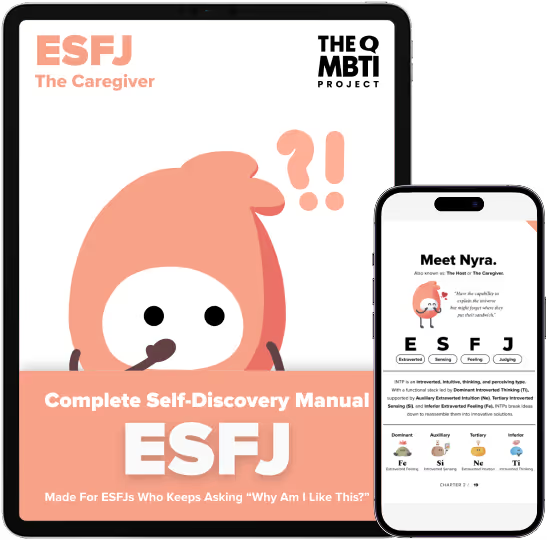
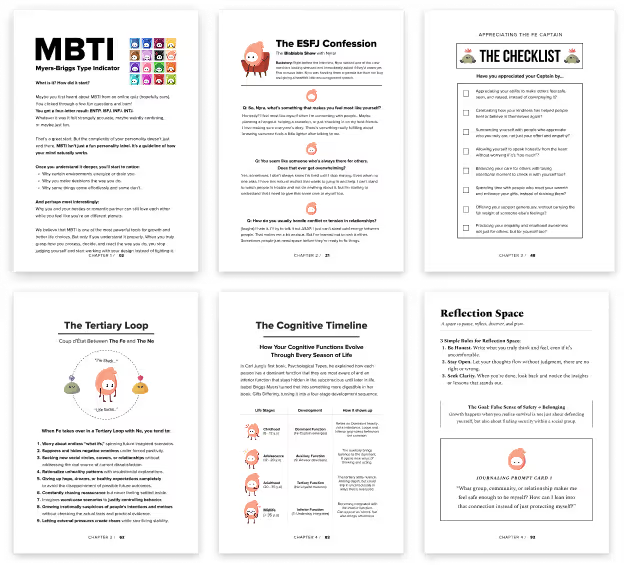
A Complete Self-Discovery Manual For An
ESFJ

A Visual Self-Discovery Guide for ESFJs Who Take Care Deeply of Everyone But Struggle to Prioritize Themselves.

Instant access • Visually Structured • Made Specifically for ESFJ
Or See What’s Inside?
Thank You!
Your guide is on its way to your inbox.

Please check your email within the next 15 minutes. Don’t forget to check your spam or promotions folder just in case
Continue Exploring
Your Personalized [MBTI] Superpower Guide Is Ready!
We created a free illustrated guide to help you understand [MBTI]'s 5 best natural strengths. The guide will be sent to the email address you entered.
Thank You!
Your guide is on its way to your inbox.

Please check your email within the next 15 minutes. Don’t forget to check your spam or promotions folder just in case
Continue Exploring
Oops! Something went wrong while submitting the form.
------------------------------------------------------------------