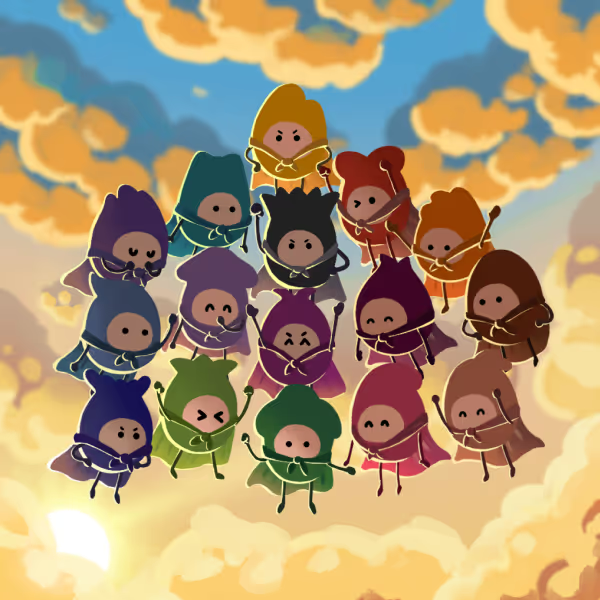
NOKI
THE PROTECTOR
THE NURTURER

ISFJ

The ISFJ personality type is characterized by reliability and deep loyalty to the people and systems they value. As one of the 16 Myers-Briggs personality types, ISFJs are naturally attentive to emotional stability and harmony within their environments. ISFJs have a natural tendency to protect the emotional safety of those around them and maintain a strong sense of trust and responsibility within their close relationships and communities.

INTROVERTED
SENSING
FEELING
JUDGING
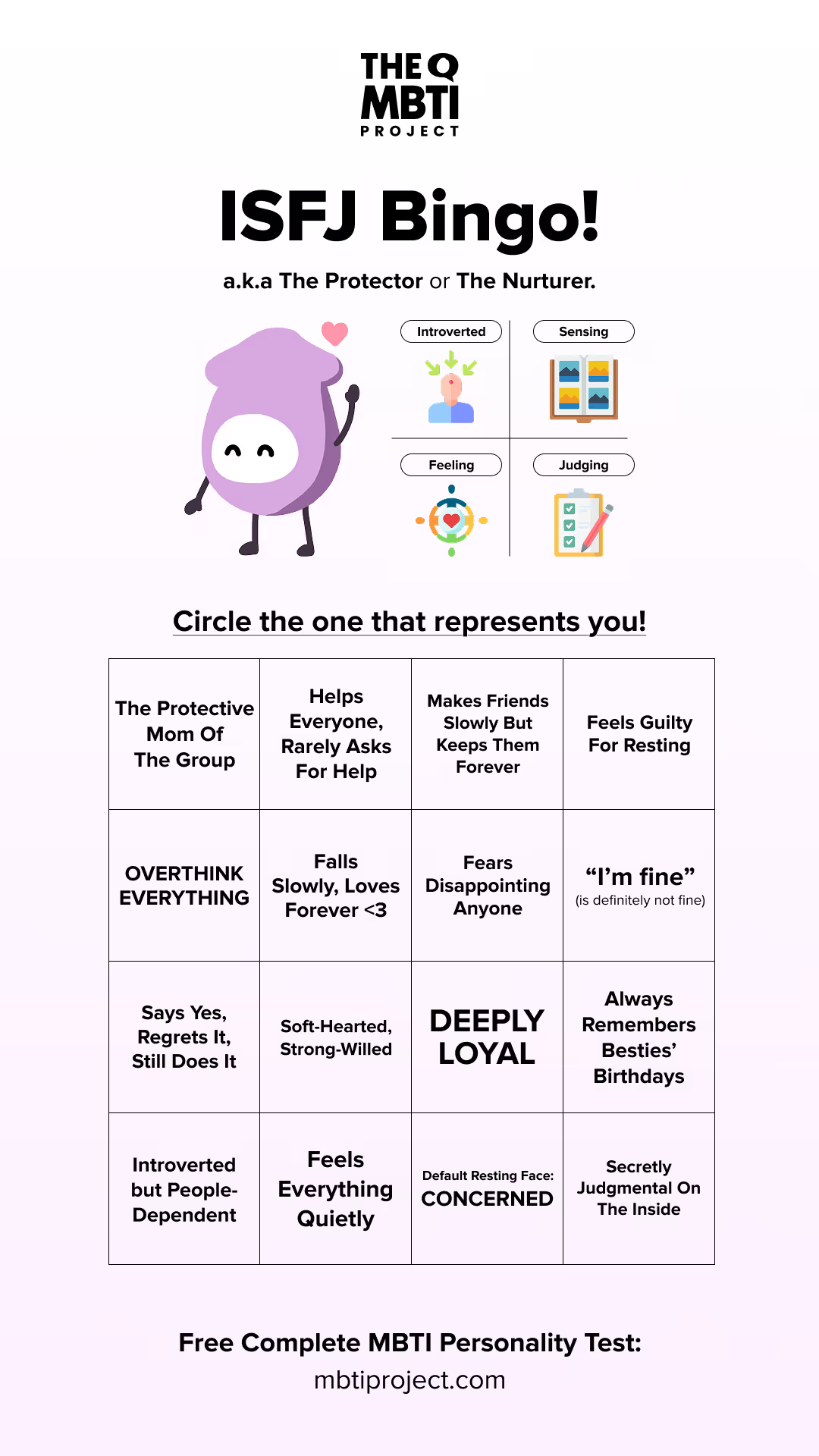
ISFJ BINGO!

Think you’re a real ISFJ?
Download this ISFJ Bingo, mark your squares, and post it on your Stories! Don’t forget to tag @thembtiproject. We’ll feature the best ones!

Download ISFJ Bingo

ISFJ Introduction

ISFJ is an Introverted (I), Sensing (S), Feeling (F), and Judging (J) personality type who experience the world through careful observation and a strong internal memory. They are highly attentive to detail, especially when it comes to recognizing the needs and emotional states of those around them.

ISFJs are called The Nurturer and The Protector because they naturally protect what they value through consistent kindness, remembering small details, and sensing others’ needs before they voice them. Their care is expressed more through action than words, by showing up, helping out, staying organized, and remaining reliable even when it requires personal sacrifice.

While ISFJs may struggle when their dedication is taken for granted, their growth lies in learning to express their own needs with clarity and honesty. At their best, they become the backbone of families, teams, and communities. The one who steadily holds everything together without seeking attention.

UNFORTUNATELY ACCURATE:

ISFJs don’t demand praise. But if you disrespect or dismiss their effort, their laser-sharp memory for detail may remember it for years.

Classic ISFJ Lines:

"Did you eat yet? I saved this for you."

"Let me double-check just in case."

“You don’t have to, but…” (They’re hoping you will.)
ISFJ Strengths

1. Dependability & Reliability

ISFJs are guided by a strong internal sense of duty. Once they internalize a commitment, it becomes part of who they are. Acting against it causes deep internal discomfort.

2. Exceptional Memory for People & Details

ISFJs don’t just remember facts. They remember details in a personalized context. This gift allows people around them to feel genuinely seen and understood.

3. High Emotional Awareness

ISFJs are often highly emotionally perceptive. They continuously scan for shifts in tone, tension, and group dynamics. While they may not voice these, they notice them constantly.

4. Stability Under Pressure

While others may panic in a crisis, ISFJs usually stay calm and focused on what needs to be done. This often positions them as emotional stabilizers within their environment.

5. Service-Oriented Leadership

ISFJs rarely lead through dominance. Instead, they lead through structure and service. They notice what’s missing, who's neglected, then focus on supporting what keeps the system stable.

6. Strong Moral Consistency

ISFJs often hold a clear internal standard of what is right, shaped by experience and personal reflection. Once they internalize a value, they tend to live by it with consistency.

Your MBTI Superpower!

Download our free 15-page guide to the most underrated strengths of the ISFJs mind

ISFJ Weaknesses

1. Overextending Beyond Their Limits

ISFJs often give beyond their limits due to their sense of duty. They say yes automatically, suppress their own needs, and only realize they are exhausted after resentment accumulates.

2. Difficulty Expressing Their Own Needs

ISFJs are highly aware of others’ emotional states, yet struggle to articulate their own. They may also fear that expressing discomfort will burden others or disrupt harmony.

3. Resistance to Change

ISFJs can experience deep discomfort when change is sudden or unplanned. They may rely more heavily on familiar methods because unfamiliar change feels unsafe.

4. Avoiding Conflict for Short-Term Peace

ISFJs tend to avoid direct confrontation to preserve harmony. However, unresolved issues do not simply disappear. Over time, this can create distance instead of healthy resolution.

ISFJ Relationships

ISFJ Communication Style

ISFJs tend to communicate in practical, concrete terms rather than abstract ideas. They rely on examples, personal experience, and observation when explaining their thoughts. They are also highly aware of how their words may affect others, often filtering their communication to avoid hurting feelings or making others uncomfortable.

ISFJs are usually clear when discussing tasks and responsibilities, but far less direct when it comes to their own feelings or boundaries. They may hint rather than state their needs explicitly, hoping others will notice. The intention is not to manipulate, but because they deeply value harmony and don’t want to create tension.

Overall, ISFJs are rarely the ones who dominate conversations. They prefer to to listen attentively, absorb information, and speak once they feel they understand the full context. This makes them warm and thoughtful communicators whom others often turn to when they need support.

ISFJ Compatibility With Other Personalities

ISFJs tend to feel most naturally compatible with types who value stability and appreciate reliability. This often includes personality types such as ESFJ and ISTJ, who shares similar preferences for responsibility and consistency. They also commonly connect well with emotionally considerate types like ISFP and INFP. In these dynamics, ISFJs tend to feel safe being themselves, and their need to feel valued and appreciated is more easily met.

ISFJs often find relationships more challenging with highly spontaneous or direct, confrontational types such as ENTP, ENTJ, and ESTP, who may unintentionally disrupt the stability ISFJs rely on. These types tend to act fast, question routines, and communicate bluntly, which can feel emotionally overwhelming for ISFJs. However, these pairings are not doomed. Growth occurs when ISFJs learn to express their needs clearly and when their partners learn to respect the ISFJ’s emotional pacing. With mutual respect, these differences can become complementary rather than destabilizing.

ISFJ Main Need in Romantic Relationship

ISFJs’ main need in relationships is emotional consistency and mutual reliability. Because they invest deeply and often express love through service and devotion, they need partners who appreciate and reciprocate their efforts rather than taking them for granted. When ISFJs feel genuinely valued, they become profoundly nurturing partners who are committed to building long-lasting relationships.

ISFJ Main Fear in Romantic Relationship

ISFJs’ main fear in relationships is being unappreciated or taken for granted. They tend to commit slowly but wholeheartedly, which makes the idea of their emotional investment being betrayed is deeply unsettling. Combined with their fear of being a burden when expressing concerns, ISFJs may either withdraw quietly or carry the emotional weight alone when a relationship lacks certainty or continuity.

ISFJ Relationship Blindspots

Blind spots are unnoticed patterns or habits that can create misunderstandings or emotional distance, even when no harm is intended.

BLINDSPOT #1

Over-Giving Without Checking-In

ISFJs may keep investing even when their effort is not returned. They often measure the quality of a relationship by how much they give rather than how equally it flows. Over time, this can lead to hidden resentment.

BLINDSPOT #2

Expecting Without Communicating

Their high sensitivity to others’ needs can lead them to assume that emotional awareness is automatic. As a result, they may expect understanding without clear communication, hoping their partner will “just know.”

BLINDSPOT #3

Staying Too Long Out of Loyalty

ISFJs take commitment so seriously that they may endure unhealthy relationships. They may prioritize stability over truth, fearing that leaving would mean betraying their own sense of duty.

ISFJ Careers

ISFJ Ideal Career Life

ISFJs perform best in career environments that offer stability, clarity of role, and respectful interpersonal dynamics. They shine when work systems and expectations are well-defined. A predictable environment provides the psychological safety they need to perform at their highest standard. Cultures grounded in professionalism and mutual respect also allow their sense of commitment and engagement to strengthen naturally.

ISFJ Career Stressors

ISFJs find it difficult to work well when expectations keep changing and they are pressured to work quickly at the expense of quality. They rely on clarity to feel secure, so unclear standards often create anxiety. Work cultures that merely reward speed and constant urgency can feel overwhelming and deeply unfulfilling.

Another major stressor for ISFJs is feeling unappreciated or taken for granted. They often express dedication through quiet, behind-the-scenes support, which means their contributions can be overlooked in environments that reward visibility over substance. When this happens, ISFJs may begin to withdraw emotionally or question their value, even as they continue performing out of duty.

Best Career Paths for ISFJ

Care, Support, and Wellbeing Roles

Examples: Nurse, Medical Assistant, Nutritionist, or Elder Caregiver.
ISFJs are naturally attentive to people’s needs and internally motivated to protect others’ wellbeing. They find fulfillment in work where their effort directly improves someone’s quality of life, especially when the care is practical rather than dramatic or performative.

Structured Operations and Administration

Examples: Administrative Officer, Operations Coordinator, or HR Staff.
ISFJs function best in environments where routines and responsibilities are clearly defined. They are naturally wired to maintain systems rather than constantly reinvent them. These roles reward the ISFJ’s inherent drive to maintain stability and consistency.

Education, Guidance, and Development

Examples: Teacher, Academic Tutor, or School Counselor.
ISFJs are well-suited to these roles because they are patient and deeply committed. They are not motivated by quick wins. Instead, they find meaning in gradual, sustainable improvement. Their emotional awareness also enables them to support others in thoughtful, personalized ways.

Client Care and Relationship Management

Examples: Bank Relationship Officer, Front Desk, Community Manager.
ISFJs excel at sustaining trust, not just making good first impressions. Their communication style is respectful and emotionally considerate, which helps others feel safe around them. As a result, they are especially effective in roles where relationships are ongoing rather than transactional.

Detail-Oriented Technical Fields

Examples: QA Staff, Laboratory Technician, Accountant, or Archivist.
ISFJs naturally prioritize accuracy and thoroughness. Rushed work and careless mistakes conflict with their high internal standards. Environments that prioritize reliability over speed or improvisation tend to align best with their natural strengths.

Community and Institutional Support Work

Examples: Government Officer, Public Service Administrator, NGO Staff.
ISFJs feel deeply motivated by work that contributes to something larger than themselves, especially systems that protect people or preserve long-term societal structures. Institutions, communities, and public-serving organizations often align with their values around duty and continuity.

Careers to Avoid For ISFJ

Chaotic, Constantly Changing Environments

Examples: Early-Stage Startup, Field Reporter, Crypto Day Trader.
These environments lack stability, continuity, and reliable structure, three things ISFJs rely on to feel mentally stable. Frequent pivots and unclear priorities disrupt their internal sense of control.

High-Pressure Sales & Persuasion Roles

Examples: Cold-Call Telemarketer or Door-to-Door Salesperson.
Roles that require pressure or persuasion tactics for the sake of numbers directly conflict with their internal ethics. Over time, they may feel like they are betraying their own values just to perform the job.

Confrontation or Conflict-Heavy Roles

Examples: Trial Lawyer, Political Debater, or Debt Collector.
ISFJs naturally scan for emotional safety and harmony. Prolonged exposure to hostilit or debate forces them into a defensive state. Instead of performing better, they often internalize the tension, suppress themselves, and eventually withdraw.

Image & Ego-Driven Work Cultures

Examples: Attention-Seeking Influencer or Celebrity Talent Manager.
ISFJs prefer to contribute in quiet, consistent ways, trusting that their effort will speak for itself. In highly political or image-driven environments, success often depends on social maneuvering rather than real contribution. This dynamic can leave ISFJs feeling undervalued and mentally exhausted.

Real ISFJ Examples

Real Human ISFJ

Henry Cavill
(British Actor)

“Some people thrive under pressure, but pressure can also ruin your performance, it can push you down angles which you don't want to go.”

“I like to go full bore into something. If you have a backup plan, then you've already admitted defeat.”

Shawn Mendes
(Canadian Singer & Songwriter)

“I'm tortured because I care. I'm always upset about not doing things as good as I think I could have because I care."

“During crazy times, I just hold back. People are so quick to jump on something or rip it apart."

Selena Gomez
(American Actress & Singer)

“Success is nothing if you don't have the right people to share it with; you're just gonna end up lonely."

“We only have one life, and it is very precious, and there's a lot we can do, and there's a lot we should do."

Bob Ross
(Painter & Art Instructor)

"I was the guy who makes you scrub the latrine, the guy who makes you make your bed, the guy who screams at you for being late to work."

"I tell people, 'You can do this.' And they write back and say, 'You were right. I can do this. And now I believe I can do anything."

Fictional ISFJ Characters

Steve Rogers "Captain America"
(MCU Superhero)

"Earth just lost her best defender, so we’re here to fight. And if you want to stand in our way, we’ll fight you too."

"I don’t like bullies; I don’t care where they’re from."

Yor Forger “Thorn Princess”
(Spy x Family)

"Anyone who lets their emotions control their fists does not know the meaning of true strength."

"I apologize for the intrusion, But... may I have the honor of taking your life?"

Cinderella
(Cinderella)

"I'm sorry if your highness objects to an early breakfast. It's certainly not my idea to feed you first—it's orders."

"I know it isn't easy, but at least we should try to get along together. And that includes you, your majesty."

Pam Beesly
(The Office)

"There’s a lot of beauty in ordinary things. Isn’t that kind of the point?"

"I hate the idea that someone out there hates me. I even hate thinking that al-Qaeda hates me. I think if they got to know me, they wouldn’t hate me."

Common ISFJ Mistypes

1. ISTJ - Nilo

Why ISFJs mistype as ISTJs:

  • Both are Si Dominant user→ Practical, structured, routine-oriented.
  • Both highly value sense of duty, responsibility, and loyalty,

Key Differences:

  • ISFJ (Fe Auxiliary): Filters decisions primarily through the emotional impact on the people involved.
  • ISTJ (Te Auxiliary): Filters decisions primarily through objective logic and outcome-focused efficiency.
  • ISFJ protects emotional stability, while ISTJ protects structural effectivity.
See ISTJ's Profile
2. ESFJ - Nyra

Why ISFJs mistype as ESFJs:

  • Both often take on the role of maintaining group harmony and ensuring that everyone feels included.
  • ISFJs with strong Fe may resemble ESFJs because they become more socially expressive, responsive, and attentive to others.

Key Differences:

  • ISFJ (Si Dom & Fe Aux): Empathic expression tends to be selective and private, often directed toward individuals rather than groups.
  • ESFJ (Fe Dom & Si Aux): Empathy is openly expressed and continuously activated, with a strong tendency to monitor and regulate group emotional dynamics.
  • ISFJs tend to protect inner stability first, then express care outwardly second. ESFJs tend to respond to social dynamics first, then reflect internally afterward.
See ESFJ's Profile
3. INFJ - Nomi

Why INFJs mistype as ISFJs:

  • INFJ and ISFJ are both introverted, emotionally aware, and reflective.
  • Both use Extraverted Feeling (Fe), which makes them empathetic and sensitive to others’ needs
  • ISFJs often plan carefully, think ahead, and anticipate consequences. From the outside, this can resemble INFJ's Ni dominant future orientation.

Key Differences:

  • ISFJ (Si Dominant): Focuses on past experience, reliability, and proven methods.
  • INFJ (Ni Dominant): Focuses on future patterns, meaning, and long-term implications.
  • ISFJs are more grounded in lived experience and concrete reality → “Based on what I’ve seen and experienced…”
  • INFJsINFJs mostly ask “Where is this heading?” while ISFJs mostly ask “What has worked before?”are more oriented toward internal insight, symbolic interpretation, and long-term pattern recognition. → “I can see where this is heading…”
See INFJ's Profile
Cognitive Functions Test

Specifically Designed to Navigate Mistypes

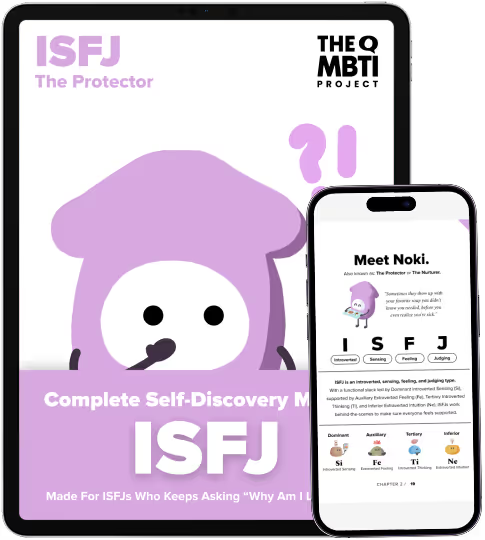
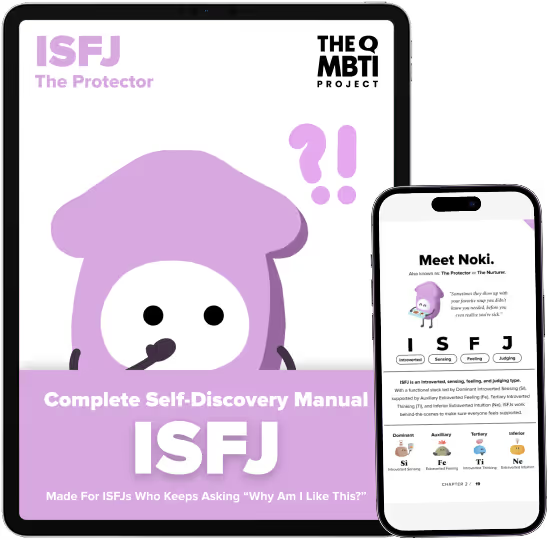
A Complete Self-Discovery Manual For An
ISFJ

A Visual Self-Discovery Guide for ISFJs Who Want to Care for Others Without Losing Themselves In The Process.

Instant access • Visually Structured • Made Specifically for ISFJ
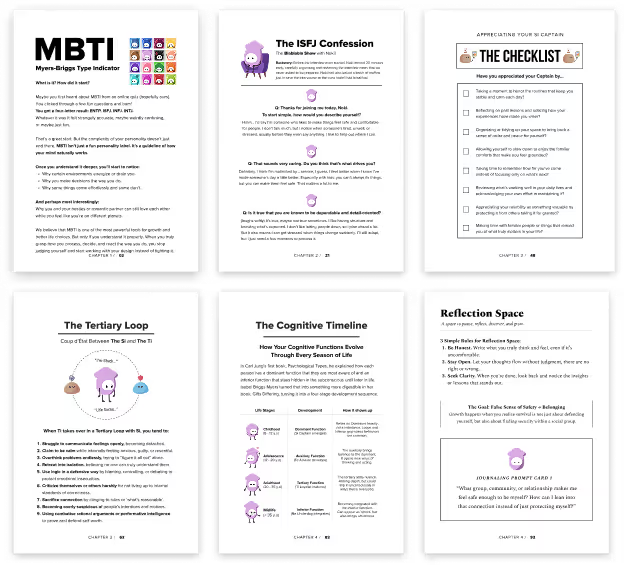
Or See What’s Inside?
Thank You!
Your guide is on its way to your inbox.

Please check your email within the next 15 minutes. Don’t forget to check your spam or promotions folder just in case
Continue Exploring
Your Personalized [MBTI] Superpower Guide Is Ready!
We created a free illustrated guide to help you understand [MBTI]'s 5 best natural strengths. The guide will be sent to the email address you entered.
Thank You!
Your guide is on its way to your inbox.

Please check your email within the next 15 minutes. Don’t forget to check your spam or promotions folder just in case
Continue Exploring
Oops! Something went wrong while submitting the form.
------------------------------------------------------------------