nova
THE MASTERMIND
THE ARCHITECT

INTJ

The INTJ personality type is characterized by independent thinking and a strong focus on strategic precision. As one of the 16 Myers-Briggs personality types, INTJs naturally challenge assumptions, refine systems, and pursue mastery in the areas they choose to focus on. They typically approach problems through carefully structured strategies and efficient solutions by using their strong pattern-recognition skills to anticipate future outcomes.

INTROVERTED
INTUITION
THINKING
JUDGING

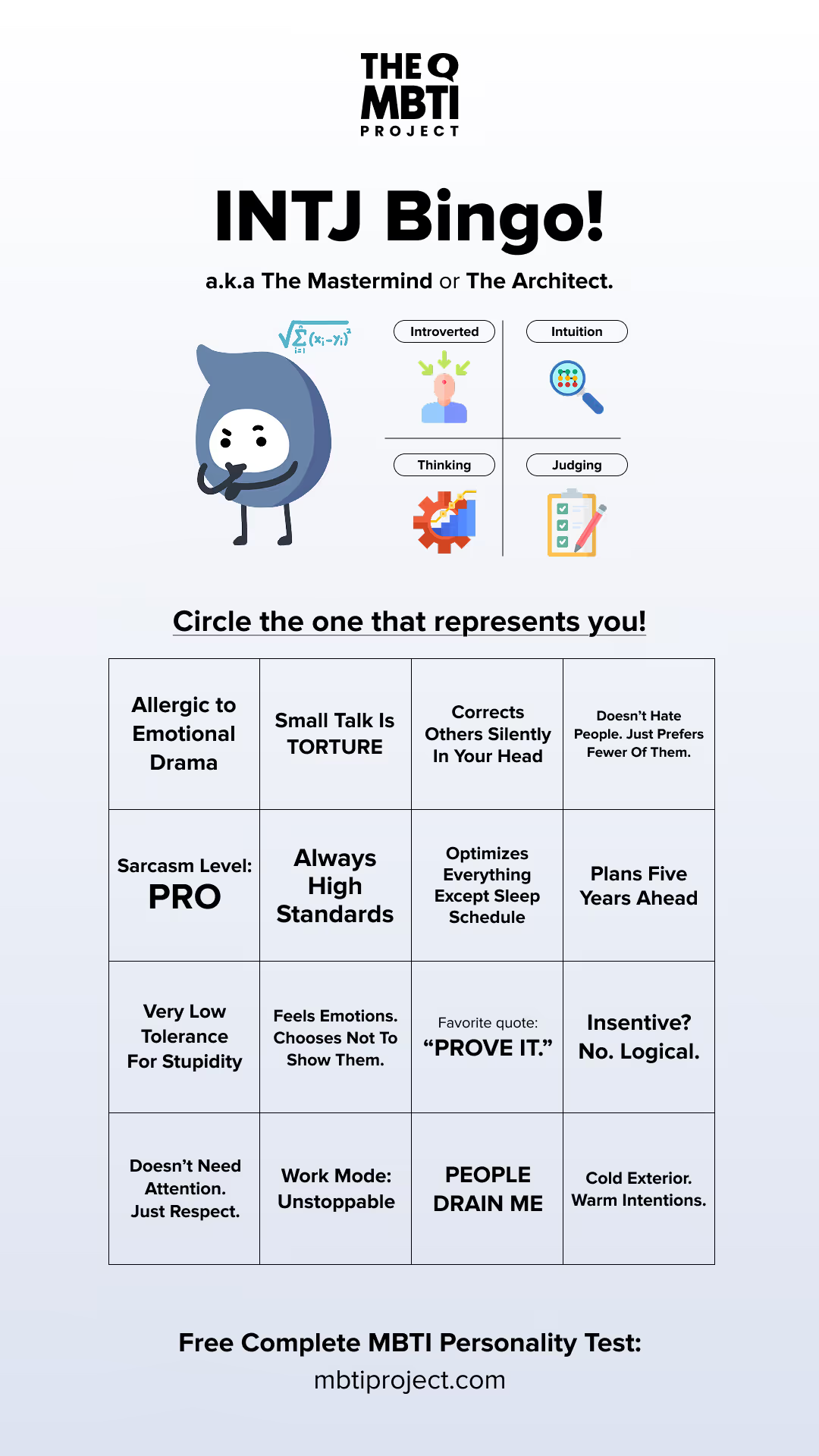
INTJ BINGO!

Think you’re a real INTJ?
Download this INTJ Bingo, mark your squares, and post it on your Stories! Don’t forget to tag @thembtiproject. We’ll feature the best ones!

Download INTJ Bingo

INTJ Introduction

INTJs are Introverted (I), Intuitive (N), Thinking (T), and Judging (J) personalities whose primary focus is pattern recognition and conceptual insight. They are naturally future-oriented and highly selective about where they invest their energy. They trust their own reasoning more than external opinions or social approval.

INTJs earn the titles The Architect & The Mastermind because they instinctively design mental maps and design effective solutions before taking action. Like an architect, they see how individual components fit into a larger system. Like a mastermind, they continuously refine strategies by anticipating outcomes long before most people recognize the pattern.

INTJs are primarily motivated by competence, mastery, and continuous improvement.
When given autonomy, intellectual challenge, and meaningful problems to solve, they become some of the most effective long-term thinkers in any environment.

UNFORTUNATELY ACCURATE:

INTJs think six steps ahead but forget to reply for six days straight. They also have a 5 year master plan to conquer life and still forget to eat lunch today.

Classic INTJ Lines:

"That's inefficient. There is an optimal way to do this."

"I disagree. What's the evidence?"

[Internal Dialogue] "This would be faster if I just did it myself."

INTJ Strengths

1. Strategic Long-Term Thinking

INTJs think in long-term trajectories rather than isolated moments. They anticipate outcomes and design plans that remain effective beyond short-term conditions.

2. Systematic Thinking

INTJs don’t solve problems in isolation. They understand how components within a system interact. This allows them to improve structures root causes instead of surface issues.

3. Independent Precise Judgment

INTJs naturally prioritize internal reasoning over social consensus. This makes them resistant to peer pressure and capable of making clear decisions even under external pressure.

4. High Standard of Competence

INTJs are strongly driven by mastery and continuous self-improvement. Once committed, they hold themselves (and often others) to exceptionally high standards of quality.

5. Analytical Objectivity

INTJs are able to separate emotion from evaluation when analyzing problems. This allows them to identify flaws accurately and make rational, evidence-based decisions.

6. Depth of Focus

INTJs can sustain long periods of deep concentration. When engaged in work matters to them, they become highly productive and deliver a high level of output.

Your MBTI Superpower!

Download our free 15-page guide to the most underrated strengths of the INTJs mind

INTJ Weaknesses

1. Perfectionism & Over-Optimization

INTJs often struggle to take action when an idea doesn’t yet meet their internal standard of excellence. While this can lead to great results, it can also delay execution and progress.

2. Difficulty Expressing Emotions

INTJs experience emotions deeply but tend to process them internally. They may struggle to express feelings, especially when those emotions feel too complex or irrational.

3. Withdrawal into Isolation

INTJs recharge through solitude, but under stress this can become excessive withdrawal. Instead of communicating needs, they may disappear to regain control and internal clarity.

4. Weak Awareness of the Present Moment

Because INTJs naturally focus on long-term implications, they can lose awareness of the present moment. They may overlook physical & emotional signals while absorbed in their internal world.

INTJ Relationships

INTJ Communication Style

INTJs tend to communicate thoughtfully and with clear purpose. They usually speak after fully processing their thoughts internally, which makes their words concise and deliberate. Rather than using conversation primarily for emotional bonding, they use it to explore interesting ideas and solve problems. This is why they prefer conversations with meaningful topics over endless small talk.

Since much of their thinking happens internally, INTJs often need time to process before responding.
In group settings, this can make them appear disengaged, even though their mind is actively processing. When giving feedback, they tend to prioritize honesty and usefulness, which can come across as blunt for some poeple. However, their intention is rarely to criticize personally, but rather to refine thinking and move discussions forward.

INTJ Compatibility With Other Personalities

INTJs tend to feel most naturally compatible with types who respect independence, value depth, and communicate with intellectual honesty. They often connect easily with other Intuitive Thinkers (such as INTP, ENTJ, and ENTP) because all these types enjoy discussing ideas and questioning assumptions. Emotionally attuned types with strong intellectual depth (such as INFJ or ENFP) can also be highly compatible, as they balance the INTJ’s logic with emotional sensitivity without overwhelming them.

INTJs tend to struggle more with types who prioritize immediate experience or social harmony over logical, long-term thinking. Highly spontaneous types (such as ESFP or ESTP) may view INTJs as overly idealistic, while INTJs may perceive them as too chaotic. Types that emphasize emotional validation and social consensus (such as ESFJ or some ISFJ dynamics) can also clash with the INTJ’s preference for blunt honesty and reasoning. These differences do not make relationships impossible, but they do require mutual maturity and effort to understand each other’s cognitive priorities.

INTJ Main Need in Romantic Relationship

INTJs need relationships grounded in intellectual respect and personal autonomy. They connect best with partners who can engage in deep conversation and respect their need for space. More than emotional intensity, INTJs prioritize consistency, trust, and alignment of values. When they feel understood and free to be themselves, they become deeply loyal and committed partners.

INTJ Main Fear in Romantic Relationship

INTJs’ deepest fear in relationships is losing their autonomy while being misunderstood. They fear emotional manipulation or being pressured into roles that do not align with who they truly are. Because they invest thoughtfully and seriously, betrayal of trust can also be deeply painful for them. More than heartbreak itself, INTJs fear committing to a relationship that restricts their growth or forces them to abandon their true self.

INTJ Relationship Blindspots

Blind spots are unnoticed patterns or habits that can create misunderstandings or emotional distance, even when no harm is intended.

BLINDSPOT #1

Underestimating Emotional Needs

INTJs often show love by trying to solve problems. However, many partners need emotional validation, not just solutions. Without realizing it, INTJs can make loved ones feel unheard when they 'fix' straight away.

BLINDSPOT #2

Avoid Being Vulnerable Too Long

INTJs feel deeply but tend to keep emotions private until they are fully processed. This can cause partners to perceive them as unavailable. INTJs may believe they are being open, while their partner feels the opposite.

BLINDSPOT #3

Over-Prioritizing Independence

INTJs value autonomy so much that they may unintentionally create distance. They may assume that loyalty and consistency are enough, while their partner may need more presence & engagement.

INTJ Careers

INTJ Ideal Career Life

An ideal career life for an INTJ is one where deep thinking is valued and independent work is available without constant interruption. They also prefer environments that assess competence more than social performance. INTJs feel most fulfilled when they can contribute to designing better systems in service of meaningful long-term purposes. They are naturally motivated by challenging, meaningful problems, especially when the work aligns with their internal values and supports intellectual growth.

INTJ Career Stressors

INTJs experience significant stress in environments that suppress deep and independent thinking. Excessive meetings, micromanagement, and unclear expectations disrupt their mental processing and make it difficult for them to perform at their best.

They are also stressed by workplaces that prioritize politics or social image over competence.
When recognition is based more on charm or favoritism than on the quality of work, INTJs tend to disengage and lose motivation. For INTJs, respect is built on intellectual integrity. When that is absent, so is their commitment.

Best Career Paths for INTJ

Strategy, Planning & Systems Design

Examples: Business Strategist, Management Consultant, Urban Planner.
These roles reward INTJs’ pattern recognition and structural insight. INTJs naturally think in models, allowing them to see how elements connect, where inefficiencies exist, and how systems can be optimized to function more effectively.

Research & Knowledge Creation Roles

Examples: Academic Researcher, Scientist, Psychologist, Economist.
INTJs are intrinsically driven by understanding. They enjoy the process of questioning assumptions and refining concepts continuously. INTJs feel most at ease in environments that allow deep focus, independent exploration, and the freedom to challenge existing ideas.

Technology & Technical Engineering

Examples: Software Engineer, Systems Architect, or Cybersecurity.
INTJs tend to thrive in workplaces where complexity can be clarified and improvement is measurable. The appeal lies not only in building solutions, but in turning those solutions into systems that scale over time. Technical engineering fields reward competence, precision, and structured thinking.

Analysis, Intelligence & Decision Support

Examples: Data Analyst, Financial Analyst, and Risk Management.
INTJs are naturally strong at synthesizing large volumes of information and turning it into conclusions that guide strategic decisions. The emphasis on objectivity and logical-accuracy demanded by these fields closely matches their internal standards.

Independent Expertise & Thought Leader

Examples: Author, Educator, Expert Content Creator, or Coach.
This category suits INTJs because it allows them to build their identity around mastery and expertise. They prefer to be respected for depth of understanding and intellectual contribution rather than social recognition.

Vision-Driven Building (Entrepreneurship)

Examples: Startup Founder, Digital Product Creator, Agency Owner.
Most INTJs are more motivated to build their own vision than to execute someone else’s. Entrepreneurship gives them control over their own long-term direction. The freedom to iterate, optimize, and own the overall architecture strongly aligns with their desire for independence.

Careers to Avoid For INTJ

High Emotional Labor Roles

Examples: Customer Service, Front Desk Hospitality, Conflict Mediation.
Careers that require constant emotional soothing or caretaking (especially without structure) are deeply draining for INTJs. These environments require constant emotional responsiveness, which doesn’t come naturally to them and can easily lead to burnout.

Highly Political, Image-Driven Environments

Examples: Politic-Heavy Corporate or Influencer-Driven Marketing.
Workplaces where success depends more on likability, networking, or internal politics are frustrating for INTJs. They tend to disengage when merit becomes about subjective favoritism rather than substance.

Purely Routine & Repetitive Work

Examples: Data Entry, Assembly Line, Cashier, or Warehouse Packing.
Jobs with little intellectual challenge tend to drain INTJs quickly. Once they understand the system, boredom sets in if there is no opportunity to improve or redesign it. INTJs need a career path that supports continous growth in order to stay engaged.

High-Interruption & Task-Switching Roles

Examples: Frontline Support (Live chat, Hotline, Ticket Escalation)
Jobs that demand nonstop multitasking disrupt the INTJ’s need for deep focus to perform their best. They struggle when they are never allowed to think deeply or finish complex work, especially one with inconsistent leaders and constant emotional-based decisions.

Real INTJ Examples

Real Human INTJ

Nikola Tesla
(Serbian-American Engineer)

“Let the future tell the truth, and evaluate each one according to his work and accomplishments. The present is theirs; the future, for which I have really worked, is mine.”

“The scientists of today think deeply instead of clearly. One must be sane to think clearly, but one can think deeply and be quite insane."

Bobby Fischer
(Chess Grandmaster)

“I felt that chess is a science in the form of a game. I consider myself a scientist. I wanted to be treated like a scientist."

"I like the moment when I break a man's ego."

Julius Robert Oppenheimer
(Theoretical Physicist)

"To try to become happy is to try to build a machine with no other specifications than it shall run noiselessly."

"I am become death, the destroyer of worlds."

Jodie Foster
(American Actress)

"It's not my personality to be extroverted emotionally, so acting has been helpful to me."

"I think "destiny" is just a fancy word for a psychological pattern."

Fictional INTJ Characters

Bruce Wayne (Batman)
(The Dark Knight)

“It's not who I am underneath, but what I do that defines me”

“The mask is not for you. It's to protect the people you care about."

Shoto Todoroki
(My Hero Academia)

"What you say doesn’t matter near as much as what you do."

" I know just how much grudges like that... Can cloud a person’s vision."

Walter White
(Breaking Bad)

"You’re really lucky, you know that? You didn’t have to wait your whole life to do something special."

“Every life comes with a death sentence. But until then, who's in charge? Me. That's how I live my life."

Lelouch vi Britannia
(Code Geass)

"When will the war end? When someone wins."

"If the king doesn’t move, then his subjects won’t follow."

Common INTJ Mistypes

1. INTP - Nino

Why INTJs mistype as INTPs:

  • Both are introverted, analytical, and think conceptually,
  • Both dislike small talk, value intellectual depth, and skeptical of authority.
  • Online tests often mistake Ni dominance in INTJs for Ti dominance in INTPs because both can appear as deep thinking in practice.

Key Differences:

  • INTJ (Ni Dom & Te Aux): Thinks toward conclusions, prioritizing structure and execution.
  • INTP (Ti Dom & Ne Aux): Thinks in explorations, prioritizing flexibility and continuous refinement.
  • INTJs tend to think: “What’s the best plan? Let’s implement it.”
  • INTPs tend to think: “Let’s keep analyzing this idea further.”
See INTP's Profile
2. INFJ - Nomi

Why INTJs mistype as INFJs:

  • Both are Ni-Dominant (future-oriented, pattern-focused, introspective)
  • Both value deep conversations over superficial interaction
  • Many INTJs with emotional maturity get mistaken as INFJ.

Key Differences:

  • INTJ (Te Auxiliary): Filters decisions through objective logic and effectiveness.
  • INFJ (Fe Auxiliary): Filters decisions through human impact and emotional consequences for others.
  • In group settings, INTJs tend to prioritize what will make the system function most effectively, while INFJs tend to prioritize what will help everyone feel included, understood, and emotionally supported.
See INFJ's Profile
3. ISTJ - Nilo

Why INTJs mistype as ISTJs:

  • Both value competence, structure, and discipline.
  • Many INTJs develop solid daily routines, which makes them look like ISTJs externally.
  • Workplace behaviors and demands often mask the intuitive side of INTJs, making them appear more practical externally (resembling ISTJs).

Key Differences:

  • INTJ (Ni Dominant): Oriented toward long-term vision, abstract patterns, and future implications.
  • ISTJ (Si Dominant): Oriented toward past experience, concrete details, and proven methods.
  • INTJs naturally focus on refining systems to improve long-term efficiency, while ISTJs naturally focus on maintaining and preserving proven systems to ensure stability.
See ISTJ's Profile
Cognitive Functions Test

Specifically Designed to Navigate Mistypes

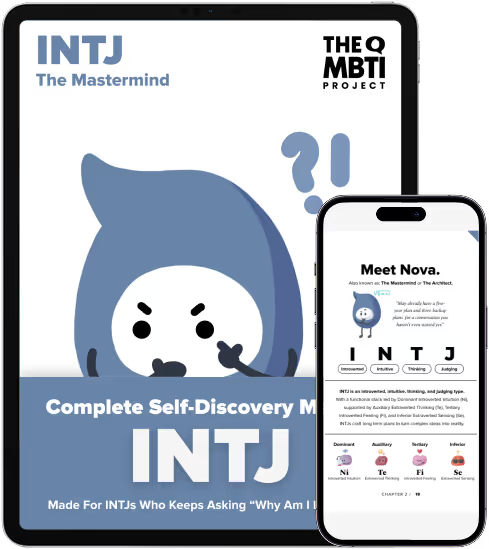
A Complete Self-Discovery Manual For An
INTJ

A Visual Self-Discovery Guide for INTJs Who Want to Refine Their Thinking and Examine Their Hidden Patterns.

Instant access • Visually Structured • Made Specifically for INTJ
Or See What’s Inside?
Thank You!
Your guide is on its way to your inbox.

Please check your email within the next 15 minutes. Don’t forget to check your spam or promotions folder just in case
Continue Exploring
Your Personalized [MBTI] Superpower Guide Is Ready!
We created a free illustrated guide to help you understand [MBTI]'s 5 best natural strengths. The guide will be sent to the email address you entered.
Thank You!
Your guide is on its way to your inbox.

Please check your email within the next 15 minutes. Don’t forget to check your spam or promotions folder just in case
Continue Exploring
Oops! Something went wrong while submitting the form.
------------------------------------------------------------------